
Can I Sue My Employer? can i sue my employer in Oregon—Protect Your Rights
"I was satisfied once John Bell took over my case."
"Communication was always timely."
Can I Sue My Employer? can i sue my employer in Oregon—Protect Your Rights
Yes, you can sue your employer in Oregon, but it’s crucial to understand when. While it often feels like employers hold all the cards, the law provides powerful protections for workers. The key is knowing the difference between treatment that is merely unfair and treatment that is actually illegal.
Knowing When You Can Sue Your Employer in Oregon
Oregon is an "at-will" employment state. In simple terms, this means your boss can fire you for a good reason, a bad reason, or no real reason at all—as long as it’s not an illegal reason. This is where many people get tripped up. Feeling wronged isn't enough; your employer's actions must have crossed a specific legal line.

Think of it this way: your employer is allowed to make bad business decisions. They can promote a less-qualified person, play favorites, or have a demanding management style. What they can’t do is make those decisions based on legally protected factors.
Unfair Treatment vs. Illegal Actions
The first step in evaluating your situation is to separate frustrating workplace dynamics from unlawful conduct. For instance, being fired because your boss's nephew needed a job is deeply unfair, but probably not illegal. But if you were fired because of your age, religion, or disability, that’s a completely different story.
The legal system isn't designed to police personality clashes or general unfairness. It steps in when an employer's behavior is driven by illegal motives, such as:
- Discrimination: Making employment decisions—hiring, firing, promotions, pay—based on your race, gender, age, disability, or other protected class.
- Retaliation: Punishing you for exercising a legal right. This could mean being fired after filing a safety complaint or having your hours cut after reporting harassment.
- Wrongful Termination: Firing you for a reason that goes against public policy, like terminating you for refusing your boss's order to commit a crime.
- Wage Violations: Illegally withholding your earnings, such as failing to pay minimum wage, refusing overtime, or not providing your final paycheck on time.
While "at-will" employment gives employers a lot of leeway, it isn’t a free pass to ignore the law. Think of state and federal laws as the essential guardrails that keep the workplace from becoming a free-for-all, protecting your fundamental rights.
To make this distinction clearer, it helps to see some examples side-by-side.
Valid vs Invalid Reasons for a Lawsuit
This table gives a quick summary comparing common workplace frustrations with legally actionable offenses. It can help you quickly assess whether your situation might have legal merit.
| A manager with a harsh or demanding leadership style. | A manager creating a hostile work environment based on race/sex. |
| Being fired due to budget cuts or company restructuring. | Being fired shortly after reporting illegal activity (whistleblowing). |
| Not receiving a raise because of overall company performance. | Being denied a raise because of your age, gender, or religion. |
| A coworker receiving favorable treatment from the boss. | A coworker getting a promotion in exchange for sexual favors. |
If your experience looks more like the examples in the right-hand column, it's a strong sign that you should explore your legal options. Taking that next step to understand your rights is critical.
The Most Common Reasons for Employee Lawsuits
When you're thinking about suing your employer, the reasons often feel deeply personal. But in the eyes of the law, these experiences usually fit into a few specific legal categories. Figuring out which category your situation falls into is the first step in determining if you have a solid legal claim.
It's about more than just being treated poorly; it's about an employer crossing a legal line and violating laws designed to protect you. Let's walk through the most common grounds for a lawsuit, starting with one of the most misunderstood concepts in employment law.
Wrongful Termination Is Not Just an Unfair Firing
This is a big one. Many people assume "wrongful termination" means being fired for a reason that's unfair, untrue, or just plain stupid. But Oregon is an at-will employment state. That means, legally, your boss can fire you for a bad reason—or no reason at all—as long as the real reason isn't illegal.
So, what makes a firing illegal? A termination becomes "wrongful" when it violates a clear public policy. Think of it this way: society has an interest in protecting people who do the right thing. The law steps in to prevent employers from punishing you for it.
Here are a few classic examples of what that looks like in the real world:
- Serving on a jury: You can't be fired because you got called for jury duty.
- Refusing to break the law: Your boss tells you to lie to an inspector or cook the books, you refuse, and you're fired.
- Exercising a legal right: You get hurt on the job, file a legitimate workers' compensation claim, and are terminated shortly after.
The thread connecting these is that you were fired for upholding a civic duty or exercising a right guaranteed to you by law. That's the heart of a wrongful termination claim.
Retaliation: The Single Biggest Claim
If there's one reason that leads to more lawsuits than any other, it's retaliation. It’s also often the easiest to prove. Let's say you notice unsafe wiring on a piece of equipment and report it to HR. A week later, you're suddenly written up for "poor performance," despite a history of great reviews. That's a textbook retaliation scenario.
Retaliation is when an employer takes any negative action against you because you engaged in a "legally protected activity."
What's a protected activity? It’s any time you stand up for your rights under the law. This could mean reporting discrimination, answering questions in an investigation into the company, asking for a disability accommodation, or even just talking about your salary with a coworker.
The "negative action" doesn't have to be a firing. It can be anything that would deter a reasonable person from speaking up, including:
- A demotion or a sudden pay cut
- A transfer to a miserable shift or a faraway location
- Sudden, baseless negative performance reviews
- Getting shut out of meetings or projects you'd normally be part of
The numbers on this are staggering. Retaliation is the top reason employees file claims, making up nearly 60% of all discrimination charges filed with the U.S. Equal Employment Opportunity Commission (EEOC) in a recent year. You can dig into these numbers and other employment law statistics to see just how common this is.
Discrimination and Harassment
Discrimination means being treated differently—and worse—because you belong to a protected class. Both federal and Oregon laws define these classes, which cover things like your race, religion, sex (which includes gender identity and sexual orientation), national origin, age (if you're 40 or older), and disability.
Sometimes discrimination is blatant, like a manager saying, "We don't hire women for this job." But more often, it's subtle. It might look like a pattern of older, experienced employees being let go during a "company restructuring" while younger, cheaper employees keep their jobs.
Harassment is a form of discrimination. It's any unwelcome conduct based on one of those protected traits. For it to be illegal, however, it has to be so severe or happen so often that it creates what the law calls a hostile work environment. A single clumsy joke probably isn't illegal. But a daily barrage of racial slurs, offensive images, or demeaning comments almost certainly is. The key question is whether a reasonable person would find the environment to be intimidating, abusive, or hostile. This is a critical distinction when you're trying to figure out if you can sue your employer for harassment.
Understanding Wage Violations and Your Right to Fair Pay
Few things are more fundamental to your job than getting paid correctly and on time. When an employer doesn't hold up their end of the bargain, it’s not just an inconvenience—it’s a serious violation of the law often called wage theft. This isn't about an occasional, honest payroll mistake; it’s about practices that can systematically cheat you out of the money you've rightfully earned.
Oregon's wage and hour laws are in place for a simple reason: to make sure you get every dollar you're owed. These rules cover everything from your hourly rate and overtime to when you must receive your final paycheck. Violations can be sneaky, and you might not even notice them unless you're carefully reviewing your pay stubs.
It helps to think of your pay stub as a detailed receipt for your time and labor. You’d check a store receipt for errors, right? You need to give your pay stub that same level of scrutiny to confirm you were paid for all your hours, especially any overtime you worked.
The Misclassification Trap and Unpaid Overtime
One of the most common ways employers shortchange their workers is by failing to pay proper overtime. In Oregon, most hourly employees are entitled to one and a half times their regular pay rate for any hours they work over 40 in a week. A frequent tactic employers use to get around this is misclassifying employees.
For example, they might put you on a salary, give you a title like "Assistant Manager," and tell you that salaried employees don't get overtime. That's often just not true. Simply being paid a salary doesn't automatically disqualify you from overtime pay.
To be legally exempt from overtime, your actual job duties—not just your title—have to meet very specific legal tests. These usually involve high-level managerial duties or exercising significant independent judgment. An employer can't just slap a title on your position and call it a day to avoid paying you what you’ve earned.
An employer cannot change your right to overtime pay just by changing your job title or how you are paid. The law looks at what you actually do each day, not what your title is.
Other Common Wage and Hour Violations
Beyond the overtime issue, there are several other ways an employer might illegally withhold your earnings. Knowing these red flags is the first step toward protecting your hard-earned money.
Keep an eye out for these frequent violations:
- Illegal Deductions: Your boss generally can't take money out of your check to cover a cash shortage, a customer who walked out on a bill, or broken equipment without your specific, written consent.
- Minimum Wage Violations: For every single hour you work, you must be paid at least the minimum wage set by the state or your local city.
- Final Paycheck Delays: Oregon has strict deadlines for your final paycheck. If you're fired, your employer typically has until the end of the next business day to pay you. If you quit with at least 48 hours' notice, your final check is due on your very last day.
Gathering Evidence for a Wage Claim
If you think you're a victim of wage theft, good records are your best friend. The more documentation you have, the stronger your case will be. You don't need a "smoking gun" email from your boss admitting they underpaid you; consistent, detailed records are incredibly powerful.
Start gathering these key documents right away:
Pay Stubs: Hold on to every single one. They are your employer’s official record of what they paid you.
Personal Time Logs: Keep your own simple, daily log of your hours. Just jot down when you start, when you leave, and the length of your breaks. This personal record is crucial for disputing inaccurate company timesheets.
Relevant Communications: Save any emails, texts, or memos about your hours, pay, or job duties.
If your employer has violated your right to fair pay, you can file a lawsuit to recover what you're owed. Oregon law is very pro-employee in these cases, and you can often recover not just your unpaid wages but also substantial penalties against the employer.
How Workers’ Compensation Impacts Your Ability to Sue
When you get hurt on the job in Oregon, your first stop is almost always the workers’ compensation system. It’s a system built on a fundamental trade-off. In exchange for providing employees with no-fault medical coverage and wage replacement, employers get a powerful shield against most personal injury lawsuits.
This shield is known as the "exclusive remedy" rule. In simple terms, it means that for a typical workplace accident—like straining your back lifting a box or slipping on a wet floor—your only option for compensation is through a workers' comp claim. You can’t turn around and sue your employer for negligence, even if a bit of carelessness on their part led to the accident.
But that shield isn’t unbreakable. The law carves out some very specific exceptions for situations that go far beyond a simple accident. Knowing when these exceptions apply is the key to understanding your full legal rights.
When Can You Sue for a Workplace Injury in Oregon?
Distinguishing between a standard workers' comp claim and a situation that allows for a direct lawsuit can be tricky. This table breaks down some common scenarios to help clarify the difference.
| You slip on a freshly mopped floor with no "wet floor" sign. | Workers' Compensation | No. This is generally considered negligence, which is covered exclusively by workers' comp. |
| A manager intentionally disables a machine's safety guard to boost output. | Workers' Compensation & Lawsuit | Yes. This could meet the high standard for an "intentional tort," falling outside the exclusive remedy rule. |
| You are injured in a car accident while driving for work. | Workers' Compensation & Lawsuit | Maybe. You can sue the at-fault third-party driver, but generally not your own employer. |
| A piece of new equipment malfunctions and injures you. | Workers' Compensation & Lawsuit | No, but... you can likely sue the manufacturer of the faulty equipment in a third-party claim. |
Ultimately, the ability to sue your employer directly for an injury hinges on whether their conduct was not just careless, but deliberately harmful.
Intentional Harm: The Biggest Exception
The most significant exception to the exclusive remedy rule is for intentional harm. We're not talking about simple mistakes or forgetfulness here. To sue your employer directly for an injury, you generally have to prove they knew with substantial certainty that their actions would cause you harm.
A classic example is an employer who orders a worker into a trench they know is unstable and likely to collapse, without providing any safety shoring. If that trench collapses and injures the worker, it's more than just negligence—it's a deliberate act. In that kind of extreme situation, you could file a lawsuit against your employer on top of your workers' comp claim. To see what a standard claim covers, you can explore the details of what workers’ compensation benefits include.
While intentional physical harm is a major exception, other employer misconduct, like wage theft, also gives you a direct path to the courthouse.
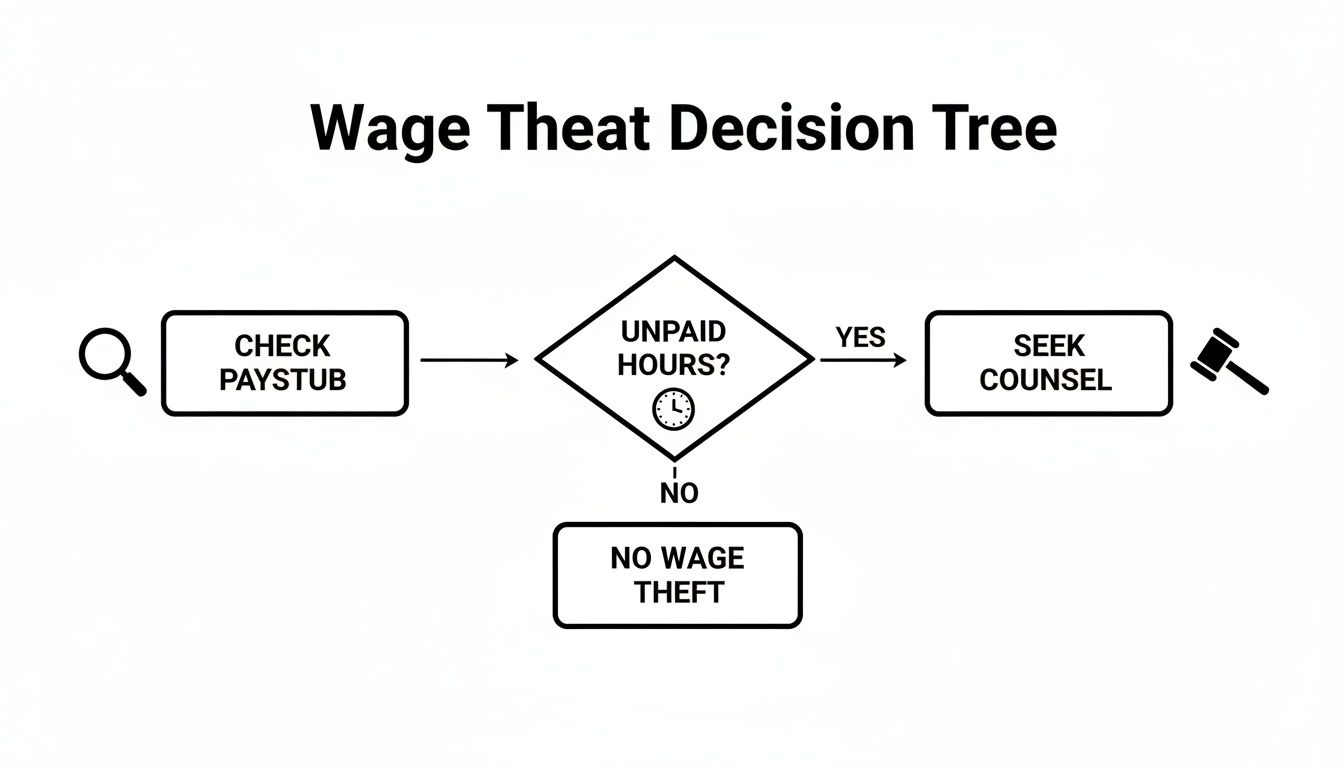
This flowchart provides a simple guide for what to do if you think your employer isn't just being careless, but is actively taking money you've rightfully earned.
The Door Is Open for Third-Party Lawsuits
There's another huge area where you can file a lawsuit for a workplace injury: when someone other than your employer is at fault. The exclusive remedy rule is a shield for your employer, not for the rest of the world.
The "exclusive remedy" rule is a shield for your employer, not for the rest of the world. If someone else's negligence causes your on-the-job injury, you can still pursue a claim against them.
Let's say you’re a delivery driver, and while on your route, you’re rear-ended by a distracted driver. You are absolutely entitled to file a workers' compensation claim to cover your medical costs and lost time from work. But you can also file a separate personal injury lawsuit against the driver who hit you.
Here are a few other common examples of third-party claims:
- Defective Products: A power tool malfunctions and injures you. You may have a solid case against the tool's manufacturer.
- Subcontractor Fault: You're a painter on a large construction site and are injured when a roofer from another company carelessly drops materials on you. You can sue the roofing company.
- Unsafe Property: You're a home health aide who trips and falls on a client's broken, unrepaired walkway. You may be able to sue the homeowner for your injuries.
Juggling a workers' compensation claim and a third-party lawsuit at the same time can get complicated fast. An experienced attorney can make sure both cases move forward correctly, helping you secure the full and fair compensation you’re owed from everyone responsible.
Critical First Steps to Protect Your Legal Claim
If you feel your employer has crossed a legal line, what you do next is absolutely crucial. The actions you take and the details you preserve in these first moments can make or break your ability to build a strong case down the road. You have to shift your mindset and become the lead investigator for your own cause.
Your immediate mission is to lock down every shred of evidence before it vanishes. This is about more than just grabbing a few documents; it's about methodically laying the groundwork for a potential legal claim. Every text, email, and performance review is a piece of the puzzle, and your first job is to make sure that puzzle can be put together with hard proof.
Start Documenting Everything—Immediately
Evidence is the heart and soul of any legal action. Without it, even the most justified claim will likely go nowhere. You need to move fast to secure anything and everything related to what happened.
Think about all the ways you communicate at work and start gathering:
- Digital Chatter: Save every important email, text, Slack message, or Teams chat. The best practice is to forward copies to a personal email address that your employer can't access.
- Official Paperwork: Pull together your employment contract or offer letter, the employee handbook, any performance reviews (good or bad), and disciplinary notices.
- Pay Records: Your pay stubs and time sheets are obviously vital for wage disputes, but they can also tell a story in retaliation cases by showing a sudden cut in hours or a demotion.
But don't just collect what already exists—create your own record. Start a detailed journal or log of events. For every single incident, write down the date, time, and place. Document exactly what was said or done, and list who else was there to witness it. A well-kept log is one of the most powerful tools you can have. You can check out this practical incident reporting guide and samples to see how to structure this kind of information effectively.
Create an Official Paper Trail With Your Employer
I know it can feel daunting, but you have to report the problem through the company's official channels. That usually means filing a formal, written complaint with Human Resources (HR) or your manager, following the exact procedure laid out in your employee handbook.
This accomplishes two critical things. First, it puts the company on formal notice and gives them a chance to fix the situation. Second, and more importantly for a potential lawsuit, it creates a paper trail. If your employer ignores your report or, even worse, retaliates against you for making it, that complaint becomes a cornerstone piece of evidence.
Your goal is to create a clear, date-stamped record showing you tried to solve the problem internally. It’s much harder for an employer to claim ignorance when you have a documented history of formal complaints.
Don't Miss the Deadlines
In the legal world, the clock is always ticking. Strict deadlines, known as statutes of limitations, govern how long you have to file a claim. If you miss one of these deadlines, your right to sue could be gone forever, no matter how strong your case is.
For many discrimination and retaliation claims in Oregon, you have to start by filing a complaint with a government agency like the Bureau of Labor and Industries (BOLI) or the federal Equal Employment Opportunity Commission (EEOC). You often have as little as one year from the date the illegal act occurred to get that paperwork filed.
The legal system is a maze, and these deadlines are non-negotiable. As soon as you suspect your rights were violated, you should talk to an attorney. They can help you navigate the deadlines and prepare crucial documents, like a formal demand letter, which is often a key step before a lawsuit is even considered. To get a better sense of this, you can learn more about what is a demand letter and how it functions.
Taking these first steps can mean the difference between getting justice and walking away with nothing. The stakes are high; a recent discrimination lawsuit resulted in a $366 million jury verdict. And with 42% of Americans reporting they've either experienced or witnessed racial discrimination at work, it's clear why being prepared is so essential.
Navigating the Legal Process: What to Expect
Thinking about suing your employer is a huge step, but what actually happens next? The reality of the legal system is often a far cry from the high-drama courtroom scenes you see on TV. Understanding the typical roadmap can help you set realistic expectations and see why an experienced guide is so crucial.

Here's the first thing you should know: very few employment cases ever see the inside of a courtroom. The overwhelming majority are resolved through negotiation and settlement long before a trial ever begins.
In fact, some statistics show that over 95% of cases settle before a jury ever hears them. This isn't a sign of weakness; it shows that suing your employer is a legitimate path that typically ends with a structured, negotiated resolution.
Discovery: The Evidence-Gathering Phase
Once a lawsuit is filed, the case enters a critical stage called discovery. Think of it as a mandatory "show-your-cards" phase where both sides are legally required to share all the evidence they have related to your claims.
It’s an intense period of information gathering designed to make sure there are no last-minute surprises if the case does go to trial. During discovery, your attorney and your employer’s legal team will exchange a mountain of information.
This process usually includes:
- Written Questions (Interrogatories): These are formal, written questions that the other side must answer completely and under oath.
- Requests for Documents: Your lawyer will demand relevant files, like your complete personnel folder, internal emails about you, company policies, and any reports from internal investigations.
- Depositions: This involves formal, out-of-court testimony given under oath by you, your former manager, HR representatives, and other key witnesses.
Discovery is where the real strength of a case is tested. It's a methodical process of uncovering facts and locking down testimony that will form the basis for either a strong settlement negotiation or a successful trial.
This phase is incredibly thorough and often a game-changer. It can make or break a case.
Depositions: Giving Sworn Testimony
A deposition is probably one of the most important (and nerve-wracking) parts of discovery. It’s where you, your ex-boss, and other important witnesses will sit down and answer questions from the opposing attorneys, under oath. A court reporter will be there, typing up an official transcript of every single word.
The goal is to find out exactly what each person knows, see how they hold up under pressure, and lock in their testimony for a potential trial. You'll probably receive an official document like a sample deposition notice to schedule it.
Feeling prepared is absolutely essential. That's why we created a guide on how to prepare for a deposition—it walks you through what to expect and how to handle yourself.
Settlement vs. Trial: Making the Right Choice
As the evidence from discovery starts piling up, the strengths and weaknesses of each side's arguments become much clearer. This is usually when serious settlement talks begin. A settlement is simply a negotiated agreement to end the lawsuit, which almost always involves a financial payment in exchange for you dropping your case.
Deciding whether to accept a settlement offer or keep pushing toward a trial is a massive strategic decision, and it’s one you'll make with your attorney's guidance. Each path has some very real pros and cons.
Settlement:
- Pros: You get a guaranteed outcome, it's over much faster, legal costs are lower, and the details remain private.
- Cons: The final amount might be less than what a sympathetic jury could award.
Trial:
- Pros: There's a chance for a much larger financial award from a jury and the satisfaction of a public ruling that your employer was in the wrong.
- Cons: Trials are incredibly expensive, drag on for a long time, and are emotionally draining. Plus, you carry the very real risk of losing and walking away with nothing.
Ultimately, navigating discovery and weighing a settlement offer against the risks of a trial is where the value of a seasoned employment attorney truly shines. We can analyze the evidence, manage the legal back-and-forth, and advise you on the best strategic path forward to get the justice you deserve.
Common Questions About Suing an Employer
Thinking about taking legal action against your employer naturally brings up a lot of urgent questions. Here, we'll tackle some of the most common concerns we hear from people who are considering their options.
How Much Does It Cost to Hire an Employment Lawyer?
Most people are surprised to learn that it often costs nothing upfront. Reputable employment lawyers typically work on a contingency fee basis.
This arrangement means the lawyer's fee is a percentage of the money they win for you, either through a settlement or a verdict at trial. You don't pay by the hour, and there are no initial retainer fees to worry about.
Put simply, if you don't get paid, neither does your attorney. This model ensures that anyone can afford to seek justice, not just those who can write a big check.
Can My Employer Fire Me for Suing Them?
Absolutely not. It is against the law for your employer to fire you for filing a lawsuit or taking part in an investigation against them.
This kind of punishment is called retaliation, and it’s strictly forbidden under both federal and Oregon law.
Firing someone for exercising their legal rights is a classic case of an employer digging their own hole deeper. It's not just illegal—it gives you grounds for a brand new lawsuit for retaliation, often making their legal troubles much worse.
What Kind of Evidence Do I Need for My Case?
The success of any legal claim hinges on the evidence you have to back it up. While the specifics depend on your situation, some of the most compelling evidence often includes:
- Written communications: Things like emails, text messages, or Slack/Teams chats that support your side of the story can be incredibly powerful.
- Official documents: Your employee handbook, performance reviews, disciplinary write-ups, and pay stubs are often key pieces of the puzzle.
- A personal journal: Keeping a detailed log of events—with dates, times, what was said, and who was there—can be invaluable for building a timeline and proving your case.
An experienced lawyer knows exactly what to look for. They can help you identify, gather, and present the specific evidence needed to build the strongest claim possible.
If you feel your rights have been violated and are asking, "Can I sue my employer?", don't hesitate. The legal team at Bell Law is here to offer expert guidance and fight for the compensation you deserve. Contact us today for a free consultation to discuss your case.
Disclaimer: The information on this page is provided for general informational purposes only and is not legal advice. Reading this content does not create an attorney-client relationship. For advice about your specific situation, please contact a licensed attorney.