
Demand Letter Template: A Guide to Building Your Claim
"I was satisfied once John Bell took over my case."
"Communication was always timely."
Demand Letter Template: A Guide to Building Your Claim
A demand letter is a document used to present a claim in many Oregon personal injury or workers' compensation matters. It’s a carefully crafted document that outlines the events, details injuries and financial losses, and informs the at-fault party's insurance company what is being requested for a potential settlement.
It can be viewed not as a lawsuit, but as an initial step in a structured negotiation process.
What Is the Purpose of a Demand Letter?

After an injury from an accident, a demand letter can serve as a formal way to tell your story to an insurance company. It is a professional tool, and its main purpose is to initiate settlement discussions by presenting the facts clearly and logically. This is an opportunity to explain why their insured may be considered at fault and break down the full extent of the damages claimed—not just the financial ones, but the personal toll as well.
It is important to understand that this is not a court filing. It is a step that often occurs before legal proceedings might escalate to that point. A well-written letter can demonstrate that you are serious and organized, which may open the door to settlement discussions without court involvement. For a deeper dive, you can check out our guide on what a demand letter is.
The Strategic Value of This Document
At its core, a demand letter is about communication. It organizes a collection of medical bills, police reports, and personal experiences into a coherent narrative that an insurance adjuster can evaluate.
When a claim is presented with supporting evidence and clear calculations, it can provide the insurance company with information to help them assess the value of a case. This type of preparation and organization can potentially speed up the negotiation process.
A well-structured demand letter can be a cornerstone of a pre-litigation strategy. It may set the tone for the communications that follow. A significant percentage of pre-suit demand letters receive a response, which is a first step toward potentially avoiding a drawn-out legal process.
What a Good Demand Letter Accomplishes
A demand letter is more than a simple request for money; it's a strategic tool designed to perform several functions at once. It is about building a solid foundation for the negotiation to come.
A strong letter generally seeks to:
- Establish a Basis for Liability: It should clearly state who is believed to be at fault and why, backing it up with evidence like a police report or witness statements.
- Detail Your Damages: This is where every cost is itemized—medical bills, lost wages, prescriptions, and so on. It also provides a space to articulate non-economic damages, such as pain and suffering.
- Initiate Negotiation: The letter presents a specific settlement amount being requested. This number becomes an anchor for future discussions.
- Create a Formal Record: It puts the settlement attempt on the record, which could be important if further legal action is considered down the road.
Using a demand letter template can be a helpful way to ensure all these critical pieces are organized professionally. It is a significant step, setting the stage for every conversation and negotiation that follows.
Breaking Down an Effective Demand Letter
Think of your demand letter as the story of your case. An effective one walks the insurance adjuster through the events in a clear, logical way that makes the conclusion—the settlement amount—feel well-supported. Each section builds on the last, creating a solid foundation for the claim.
When this structure is done correctly, it can present a case with confidence and clarity. The goal is not about being aggressive; it’s about being thorough and persuasive.
Laying the Groundwork: The Factual Background
This is where you set the scene. Start with a straightforward, objective account of the incident. The goal is to tell the story from your perspective while sticking to the facts.
For example, instead of saying, "The other driver was flying down the road and just plowed into me," a more precise statement would be: "On May 15, 2023, around 2:00 PM, my vehicle was stopped at the red light at the intersection of Main Street and Oak Avenue. While stopped, my vehicle was struck from behind by a blue 2021 sedan."
Stick to the who, what, where, and when. An adjuster should be able to read this section and compare it with the police report.
Presenting the facts in a calm, chronological way helps establish credibility. It may signal to the insurance adjuster that you are organized and focused on relevant information.
This factual narrative is the undisputed foundation of the entire claim.
Proving Your Point: How to Argue Liability
Once you've explained what happened, it's time to explain why the other party may be legally responsible (or liable) for your injuries. This is where you connect the facts of the incident to a specific act of alleged negligence by their insured.
This can often be done by referencing specific traffic laws. In a rear-end collision, for instance, you could bring up a driver's duty to maintain a safe following distance.
- Point to the Proof: Refer directly to key evidence, like a police report that cites the other driver for a violation.
- Explain Their Alleged Failure: Clearly state how their action—or inaction—may have been a breach of the duty of care they owed you. Running a red light or failing to yield are common examples.
- Connect the Dots: Make the direct link between their alleged negligence and the accident itself.
This section is your argument. You’re moving beyond just stating facts and are now explaining why those facts could make the other party financially accountable for your losses.
Documenting the Human Cost: Your Injuries and Treatment
Here, you shift focus to the physical and emotional toll the incident took on you. This section should provide a complete picture of your injuries, the medical care you’ve received, and any treatment that’s still ongoing. Organization is key.
It can be helpful to start with the initial diagnosis—what the ER doctor or your first physician found. From there, walk the adjuster through your treatment journey chronologically.
For example, you could list it out like this:
- Initial emergency room visit (diagnoses: cervical strain, concussion).
- Follow-up visits with your primary care doctor.
- Referrals to specialists like an orthopedist or neurologist.
- The number and duration of physical therapy sessions.
- A list of any medications prescribed.
This part of your demand letter template should paint a vivid picture of your medical experience. Don't forget to mention how the injuries have impacted your daily life, whether it's difficulty with chores or being unable to enjoy your hobbies.
The Bottom Line: Calculating and Presenting Your Damages
"Damages" is the legal term for all the losses suffered because of the incident. This is the financial core of your demand letter, where you lay out every single cost. These are typically broken down into two main categories.
Economic Damages: These are the straightforward, out-of-pocket costs with a clear dollar value.
- Medical Expenses: Every single bill. This includes the ambulance, hospital stays, doctor visits, physical therapy, prescriptions, and any medical devices you needed.
- Lost Wages: Tally up the income you lost because you couldn't work. You’ll want to back this up with pay stubs or a letter from your employer.
- Future Medical Costs: If your doctor indicates you may need more treatment down the road, those potential costs can be estimated and included here.
Non-Economic Damages: These are the intangible losses. They don't come with a receipt, but they can be a very real and significant part of a claim.
- Pain and Suffering: This accounts for the physical pain and emotional distress you've had to endure.
- Loss of Enjoyment of Life: This covers how the injuries have limited your ability to participate in and enjoy your normal daily activities.
A clear, itemized list makes it easy for the adjuster to see exactly how you arrived at your final number.
Before getting to the final settlement demand, let’s quickly recap the essential parts of your letter. Each piece serves a distinct purpose in building a convincing claim.
Essential Elements of Your Demand Letter
| Factual Background | Provides a clear, chronological account of the incident, including date, time, and location. |
| Liability | Explains why the other party is considered at fault, often referencing traffic laws or specific negligent acts. |
| Injuries and Medical Treatment | Details all diagnosed injuries and the full course of medical care received to date. |
| Damages | Itemizes all financial losses, including economic (medical bills, lost wages) and non-economic (pain and suffering) components. |
| Settlement Demand | States the total monetary amount requested to resolve the claim and provides a deadline for response. |
Understanding how these sections work together is key to drafting a letter that gets taken seriously.
Making the Ask: The Final Settlement Demand
After you've carefully laid out the facts, liability, injuries, and damages, you arrive at the conclusion. Here, you state a single, specific dollar amount you will accept to settle the claim and release the other party from any further liability.
This number is the sum of all the damages you've just detailed. Your letter should end by formally stating this amount and giving the insurance company a reasonable deadline to respond—30 days is a common timeframe. This is the final, actionable step that brings your entire story to a close.
Gathering Your Supporting Documentation
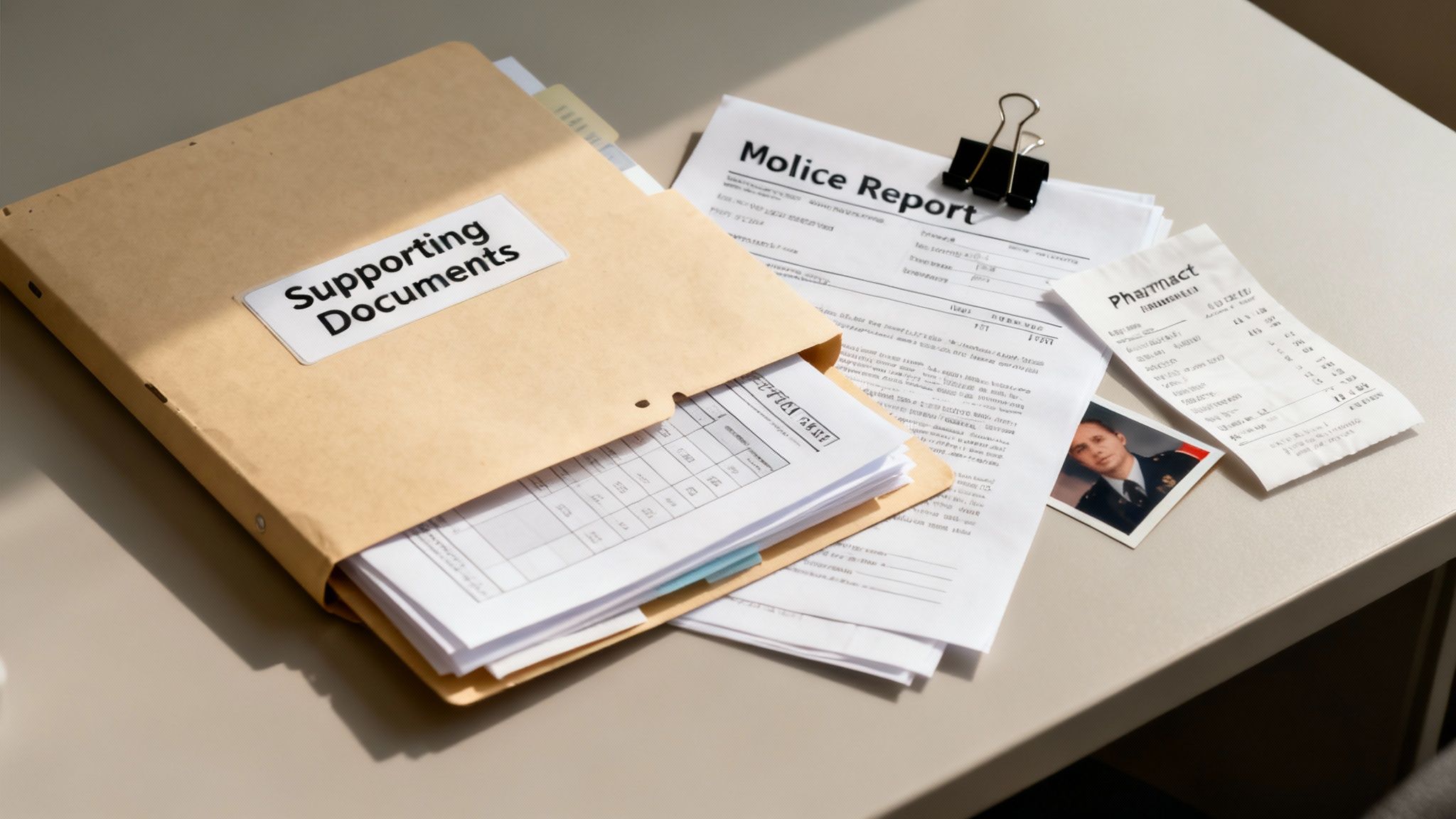
Think of your demand letter as the story of your case. And every good story needs proof. Before you begin writing, a good first step is to gather every single piece of paper related to your injury.
A well-written letter is one thing, but a letter backed by a mountain of evidence is what can truly get an insurance adjuster’s attention. Having everything organized from the start shows you’re serious and have a firm grasp on what your claim is worth. It may leave less room for them to question your story.
Your Medical Records Checklist
The heart of any personal injury claim is the injury itself. Your medical records are the objective proof of what you've been through. They create a clear timeline of your pain, your treatment, and the professional opinions of the doctors who have cared for you.
You'll need a complete set of these records. Tracking them all down can feel like a part-time job, but it is absolutely crucial. For a deeper dive into the specifics, we have a guide on how to get medical records.
Here's what you may need to find:
- Initial Treatment Records: Start at the beginning. This includes the ambulance or paramedic reports and any emergency room charts.
- Physician’s Notes: You need the detailed notes from every single doctor's visit. These notes track your symptoms, formal diagnoses, and the recommended treatment plans.
- Specialist Reports: If you saw an orthopedist for a broken bone or a neurologist for a concussion, their expert reports are valuable because they explain the specifics of your injuries.
- Therapy and Rehabilitation Records: Collect every note from your physical therapist, chiropractor, or occupational therapist. These documents show your commitment to recovery and detail the hard work involved.
Compiling Your Financial Documents
This is where you demonstrate the real-world financial cost of your injury. Every bill, receipt, and pay stub helps translate your experience into a clear dollar amount—the language every insurance company understands. These are your "economic damages," and you need a paper trail for every cent.
Payment demand letters are most powerful when they are backed by undeniable financial proof. In some industries, it's been shown that well-supported claims can get impressive results. For example, some studies show that in certain debt collection cases, over 60% of overdue amounts are paid within 30 days of receiving a detailed letter with documentation.
A meticulously organized file of your bills and losses can shut down arguments before they start. When an adjuster sees a receipt for every dollar you're claiming, it can be tougher for them to push back.
Your financial file should have these essentials:
- All Medical Bills: Don't just get the summary; get the itemized invoices from the hospital, clinics, labs, and every doctor involved in your care.
- Pharmacy Receipts: Keep a running tally of receipts for prescriptions and any medical gear you needed, like crutches, a brace, or bandages.
- Proof of Lost Wages: This is a big one. Grab pay stubs from before and after the accident to show a clear picture of the income you lost. A letter from your HR department confirming your pay rate and missed days is also incredibly helpful.
- Out-of-Pocket Expenses: If you had to pay for parking at the hospital or hire someone to mow your lawn because you couldn't, keep receipts for everything, including mileage to and from appointments.
Collecting Incident-Related Evidence
Finally, pull together all the evidence that tells the story of how the injury happened. These documents establish the facts and point toward responsibility. This is the context that ties your injuries and your financial losses directly to the at-fault party's actions.
This collection of evidence paints the full picture for the adjuster, answering the "who, what, when, where, and why" of your claim.
Make sure you have these key items:
- The Official Police or Incident Report: This is your foundation. It’s an official, third-party account of what happened, and it carries a lot of weight.
- Photographs and Videos: A picture can be worth a thousand words. Get photos of the scene, the vehicle damage, and your injuries as soon as you possibly can.
- Witness Information: Make a list of names and contact details for anyone who saw what happened. If you were able to get a written or recorded statement from them at the time, include it.
- Your Personal Notes: Throughout your recovery, you should be jotting down notes about your pain levels, your daily struggles, and how the injury is affecting your life. These notes are invaluable for ensuring your demand letter is personal, accurate, and compelling.
Writing for Maximum Impact: Clarity and Professionalism
How you present your demand letter can impact your claim. The goal is to come across as professional, objective, and firm. It is advisable to avoid emotional or accusatory language, which can put an insurance adjuster on the defensive and make a negotiation more difficult.
Think of it this way: a polished, easy-to-read letter signals that you're organized, serious, and know what you're doing. While a demand letter template provides a great starting point for structure, the tone you use is just as critical as the facts and figures you include.
Setting the Right Tone
Maintain a business-like tone from start to finish. Although the incident that led to your injury was personal and perhaps traumatic, the demand letter is a business document. Stick to a factual narrative and let your evidence do the talking.
For example, resist the urge to use inflammatory words like "reckless" unless you can tie them directly to a specific action documented in the police report or witness statements.
Instead of writing, "Your insured's reckless driving ruined my life," try something more professional: "As a direct result of the collision caused by your insured's failure to yield, I have incurred the damages detailed below."
General Insight: A professional tone builds credibility. It tells the adjuster a claim is grounded in documented facts and calculated losses, not just anger. This approach may lead to more productive negotiations.
This kind of objectivity keeps everyone focused on resolving the claim based on its merits.
Structuring for Readability
Imagine you're an insurance adjuster with a stack of files a foot high on your desk. The last thing they may want to see is a dense, multi-page wall of text. A letter that's hard to read is a letter where important details could get missed.
Structure your letter so someone can scan it quickly and get the gist.
- Clear Headings are Your Friend: Use descriptive headings to break up the letter. Think of them as signposts: "Background of the Incident," "My Medical Treatment," and "Calculation of Damages" guide the reader exactly where they need to go.
- Keep Paragraphs Short and Punchy: Aim for just a few sentences per paragraph. This creates white space, making the document feel less intimidating and much easier to digest.
- Use Bullet Points for Lists: When you're detailing injuries, medical bills, or lost wages, bullet points are perfect. They present itemized information clearly and concisely.
This clean, scannable formatting ensures the adjuster can quickly find the key information needed to evaluate your claim and make an offer.
The Final Polish
Before you send that letter, it needs a thorough review. A single typo can undercut the professional image you've carefully built. A great tip is to read the entire document out loud—it’s a surprisingly effective way to catch awkward phrasing and grammatical mistakes.
Even better, have a trusted friend or family member proofread it. A fresh set of eyes can often spot errors you’ve read over a dozen times.
Accuracy is non-negotiable. Double-check every date, name, and policy number. Most importantly, triple-check the math in your damages section. An error there can cast doubt on the reliability of your entire claim.
It’s worth noting that legal tech is increasingly focused on this kind of precision. Some analyses show that AI-assisted drafting can achieve 99% consistency in formatting and legal phrasing, potentially cutting errors by 70% compared to manual drafts alone. It just goes to show how much weight the industry places on getting it right.
And if any of your supporting documents are not in English, you'll need a proper translation. To ensure you maintain legal compliance and professionalism, check out these helpful tips for translating legal documents.
Ultimately, a clear, professional, and error-free letter presents your case in the strongest possible light and sets a constructive tone for the negotiations to come.
What Happens After You Send Your Demand Letter?
So, you've mailed off your demand letter. Now what? This is where the waiting game begins, but it's not a passive process. Understanding what comes next is important for keeping your claim on track.
How you sent the letter matters. Using certified mail with a return receipt requested is a common recommendation. This isn't just for peace of mind; it creates a paper trail, giving you proof of when the insurance company received your demand. This simple step can prevent potential headaches down the road.
If you decide to go the digital route, make sure you're doing it safely. Your letter contains a lot of personal information. It's wise to review some guidance on sending email securely before you hit send.
The Initial Response (Or Lack Thereof)
Once your letter lands on the adjuster's desk, they'll start their review. They are paid to scrutinize every detail—the facts of the incident, the evidence you've gathered, and how you calculated your damages. It is important to be patient here; a comprehensive review doesn't happen overnight.
The response from the insurance company can go a few different ways, and it’s best to be ready for any of them.
Here are some common scenarios:
- They Ask for More Information: The adjuster might come back with questions or request more documents. This is a standard part of the process.
- They Deny the Claim: Sometimes, the insurer will dispute liability entirely or argue your injuries aren't as severe as you claim.
- They Make a Counteroffer: This is a frequent outcome. The adjuster may come back with a number lower than what you demanded. This is the start of the negotiation process.
- They Accept Your Demand: While less common, it can happen. If a case is rock-solid and meticulously documented, they might agree to the initial figure to avoid a bigger fight.
This whole process really starts before you even send the letter. Getting the preparation right is half the battle.

As you can see, organizing your evidence, drafting a clear narrative, and proofreading everything carefully are the foundational steps that set you up for success once the letter is delivered.
Time to Negotiate
A counteroffer from the insurer is your official signal that negotiations have begun. Think of your demand letter as your opening bid. Their counteroffer is theirs. Now, it's a back-and-forth process to see if you can meet somewhere in the middle.
It's helpful not to be discouraged by a low first offer, as this can be a standard tactic. Your job is to respond with a counteroffer of your own, calmly and professionally reinforcing why your valuation is fair and backed by the evidence. Dealing with adjusters is a skill in itself; for more on this, check out our guide on how to deal with insurance adjusters.
Remember, negotiation is a conversation, not a battle. The goal is to find a fair settlement that both sides can live with, and that often requires a bit of give and take.
This can take time, involving multiple phone calls and letters. Keep a meticulous record of every single interaction. Note the date, who you spoke with, and what was discussed. These notes can be invaluable later on.
When You Hit a Wall
What if you just can't see eye to eye? Sometimes, no matter how well you argue your case, you and the adjuster will reach an impasse. The gap between your bottom line and their top offer is just too wide to bridge.
This is a critical juncture. If negotiations have truly broken down, your next move might be to consider formal legal action. This is often the point where someone handling their own claim realizes they may have gone as far as they can alone. It might be time to get a professional legal opinion on the strength of your case and the realities of filing a lawsuit.
Common Questions About Demand Letters
When you're trying to handle a claim on your own, a lot of questions can arise, especially around demand letters. Let's walk through some of the things people ask most often to give you a clearer picture.
Please remember, every case has its own unique factors. The answers here are for general informational purposes and are no substitute for advice from a lawyer who can analyze the specific details of your situation.
When Is the Right Time to Send a Demand Letter?
This is a big one, and the timing can hinge on your medical recovery. You want to have a complete picture of your injuries and what they've cost you before you put a number on the table.
This often means waiting until you've completed all your medical treatment. In legal terms, this is sometimes referred to as reaching Maximum Medical Improvement (MMI). If you send the letter too soon, you might not know the full extent of your medical bills or if you'll need future care, and you could end up asking for far less than your claim may be worth.
A common practice is to wait until you have a final tally of all medical costs and a clear prognosis from your doctor. This helps ensure your demand reflects the total impact the incident had on your life.
What Are the Most Common Mistakes When Using a Template?
Using a template is a great start, but it's not foolproof. One of the biggest mistakes can be letting emotion take over. An angry or overly accusatory letter is unlikely to be persuasive to an insurance adjuster; it can make negotiations more difficult from the start.
Another major misstep is simply not including the proof. Every single claim in your letter—from the cost of your physical therapy to the hours you missed at work—should be backed up with solid documentation.
Keep an eye out for these other common pitfalls:
- A Messy Layout: If your letter is jumbled, it makes it tough for the adjuster to follow your logic and evaluate your claim properly.
- Bad Math: Simple errors when adding up your medical bills or lost wages can make the adjuster question everything else in your letter.
- Skipping the Spellcheck: Typos and grammatical mistakes can make you look careless and can weaken the professional, serious tone you want to convey.
Is a Demand Letter Legally Required Before Filing a Lawsuit in Oregon?
For most personal injury cases in Oregon, a demand letter isn't a strict legal requirement for filing a lawsuit. It is better understood as a standard, and very practical, first step. It's the tool used to open the door to settlement talks and, potentially, resolve a claim without going to court.
That said, there are critical exceptions. If your claim is against a government agency in Oregon, for example, it may fall under the Oregon Tort Claims Act. This law has very specific and rigid notice deadlines that must be met. These rules can be tricky, so it is always wise to review specific laws or consult with an attorney to make sure you're not missing a crucial step.
If you're feeling overwhelmed by the complexities of a personal injury or workers' compensation claim, you don't have to figure it all out on your own. The experienced team at Bell Law is here to help you understand your options and fight for your rights. For a detailed evaluation of your case, contact us today.
Disclaimer: The information on this page is provided for general informational purposes only and is not legal advice. Reading this content does not create an attorney-client relationship. For advice about your specific situation, please contact a licensed attorney.