
How Long Does Disability Reconsideration Take in Oregon?
"I was satisfied once John Bell took over my case."
"Communication was always timely."
How Long Does Disability Reconsideration Take in Oregon?
It can be a tough moment to receive a denial letter for an initial disability application. The wait that follows an appeal may feel even more uncertain. So, let's address the big question: how long does disability reconsideration take?
The honest answer is that every case is unique, but looking at the national picture, a wait of several months has become a common timeframe.
Understanding the Disability Reconsideration Wait Time
An initial denial can be disheartening. The reconsideration stage is the first opportunity to have a fresh set of eyes look at a case. This is not just a quick second glance; a completely new examiner, someone who had no involvement with the first decision, will review the entire file. They will look at everything, especially any new medical evidence provided since the first denial.
Knowing this from the start may help in managing expectations for the road ahead.
While this waiting period is distinct from the one experienced with a first application, understanding both can provide a more complete picture. You can get a refresher on the initial disability application wait in our related article.
What Is a Typical Reconsideration Timeline?
The wait time for a decision can be influenced by many factors that are outside of an individual's control. Major factors include system-wide backlogs and staffing at the state-level agency that handles the medical reviews, known as Disability Determination Services (DDS). These issues can affect how long a file sits in a queue before an examiner picks it up.
Based on the Social Security Administration's data for fiscal year 2024, the average national wait time for a disability reconsideration decision is estimated to be between 210 and 240 days. This is a significant increase from just a few years ago, underscoring a trend of longer waits across the board.
This chart paints a clear picture of how much those wait times have grown.
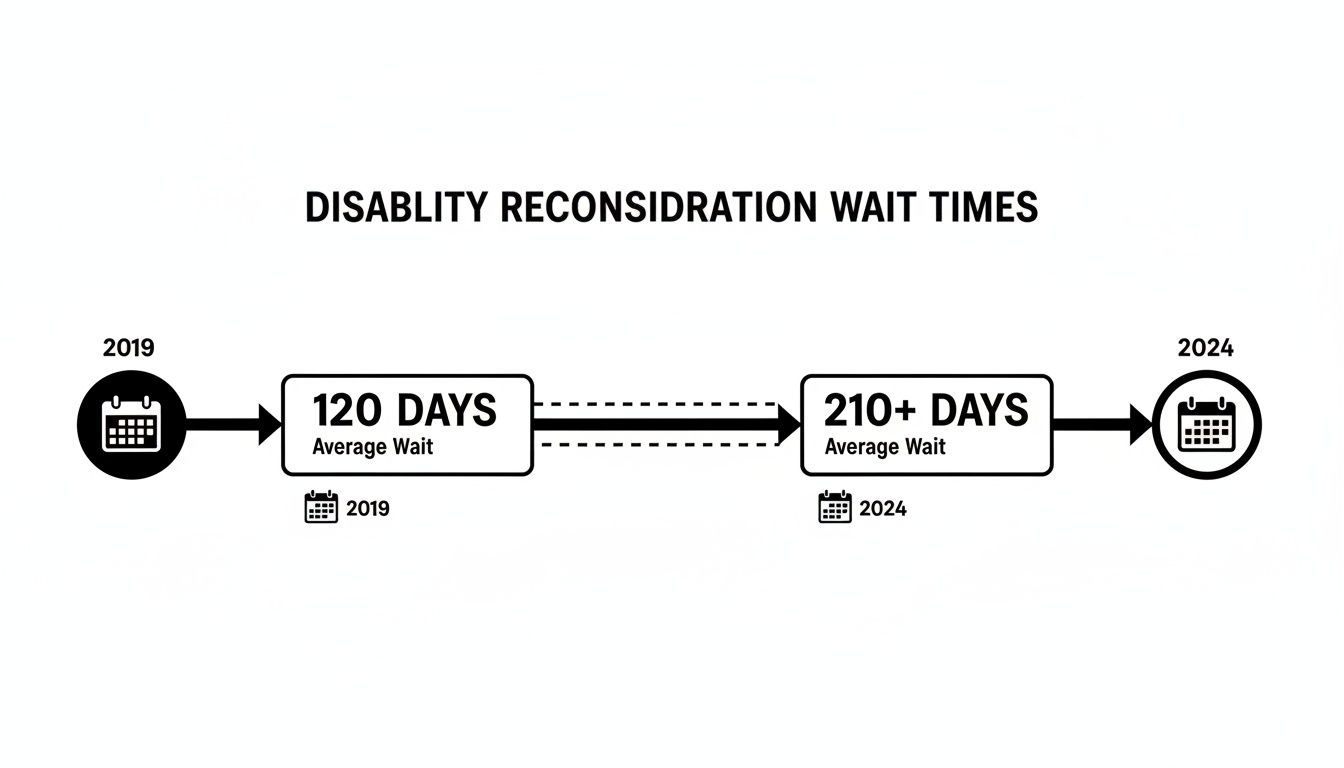
As you can see, the average wait for a decision has climbed steadily, a reflection of the growing backlogs impacting the entire system.
Why Some Reconsideration Decisions Take Longer Than Others
The wait time for a disability reconsideration decision is not a fixed number. While national averages can provide a general idea, the reality is that a specific timeline is a unique mix of several moving parts. Understanding what is happening behind the scenes can help explain why one case might move at a different speed than another.
A claim file is a detailed story the examiner must read, understand, and verify. Some stories are short and to the point, while others are more complex. The more complex the story, the longer it can take to get through.
The Complexity of Your Medical Condition
The nature of an individual's health problems plays a significant role. A claim for a condition like a severe, single-event injury with clear-cut medical evidence can be more straightforward for an examiner to process.
However, claims involving multiple conditions, a mental health impairment, or a rare disease that is not widely understood may require a much deeper dive. Conditions with symptoms that fluctuate, or those that are difficult to diagnose with a simple lab test, can lead the examiner to gather more evidence or consult with specialized medical experts. This is necessary work to evaluate a claim properly, but it adds time to the process.
The State of Your Medical Evidence
This may be the single biggest factor an individual can influence. When a Disability Determination Services (DDS) examiner picks up a file, they are looking for a clear, complete, and continuous story of medical treatment and limitations.
A well-organized file with current, comprehensive medical evidence is helpful to an examiner. When they have what they need at their fingertips, it can reduce the need to chase down missing records—a known cause of delays.
Some questions to consider about a file include:
- Completeness: Are there records from every doctor, specialist, hospital, and clinic visited for the condition?
- Currency: Does the evidence reflect the current condition, not just the condition a year ago?
- Clarity: Do the doctor's notes clearly explain the diagnosis, the severity of the symptoms, and—most importantly—how they limit the ability to function in a work setting?
If an examiner must pause their review while they wait for a doctor's office to send missing MRI results or treatment notes, the case is delayed. That back-and-forth can add weeks or even months to the wait.
Backlogs and Bureaucracy
Finally, there are the big-picture issues that are completely out of an individual's hands. The DDS office in Oregon, like those in every other state, is dealing with a massive volume of cases.
Their workload is a huge variable. If there's a sudden surge in new applications or appeals, a backlog can build up. A case might just be sitting in a digital queue, waiting its turn to be assigned to an examiner. Staffing shortages and budget constraints within the agency also have a direct impact on how quickly they can work through the caseload. These system-wide pressures are a fundamental reason why the process can feel slow.
What to Do While Awaiting a Decision
The time after filing for reconsideration can feel like being in limbo. It’s easy to wonder what, if anything, should be done. However, this waiting period does not have to be passive. There are several steps an individual can take to keep their file strong and up-to-date for the DDS examiner.

The main goal during this time is to ensure the claim file paints the most accurate and current picture of one's health. This involves staying on top of medical care and keeping the lines of communication open with the Social Security Administration (SSA).
Continue With All Medical Treatments
Of all the things an individual can do while they wait, one of the most important is to keep up with all prescribed medical treatments. Ongoing health records are the lifeblood of a claim. They provide the continuous proof that examiners look for when evaluating a condition.
Following a doctor’s orders demonstrates that an individual is doing what they can to manage their health. It also creates a consistent, up-to-date medical record that documents the severity and persistence of the condition. On the other hand, missing appointments or having large gaps in a treatment history can be a point of inquiry for the examiner reviewing the case.
A detailed and unbroken medical history is fundamental to a disability claim. Every doctor's visit, therapy session, and lab test adds to the story, offering objective evidence of how a condition limits the ability to function.
Keep the SSA Informed of Any Changes
Life doesn't pause just because a decision is pending, and it’s critical to let the SSA know about any major changes. Being proactive with communication can head off delays that may arise from outdated information.
An individual may need to reach out to the SSA if they have:
- Changes in Medical Condition: Inform them if a condition worsens or if a new diagnosis is made. This information could be very relevant to the claim.
- New Doctors or Hospitals: If a person starts seeing a new specialist or is hospitalized, they should provide the SSA with the names and contact details for these new medical providers.
- Updated Contact Information: This is simple but essential. Always report a new address or phone number. Missing an important notice because the SSA couldn't make contact can cause significant setbacks.
Organize and Submit New Evidence
As an individual continues with their medical care, they will naturally gather new evidence. This could be new MRI results, reports from a specialist, or updated notes from a family doctor. It is the individual's responsibility to get this new information to the SSA as soon as possible, which helps build a more powerful case for the reviewer. Knowing how to properly handle a Social Security medical records request can be a huge advantage here.
It can also be helpful to get a sense of what makes for strong documentation by reviewing medical record review best practices for legal cases. By actively managing records and communications, an individual is no longer just waiting—they are taking an active role in strengthening their claim.
How to Check Your Reconsideration Status
The waiting game during a disability reconsideration can be tough. Staring at the calendar and wondering what is happening with a case can be stressful. Thankfully, the Social Security Administration (SSA) offers ways to check on a claim's status.

Knowing how to check on a claim's progress can provide some peace of mind. While it won't speed up the decision, staying informed can offer a small sense of control. There are two main ways to get an update.
Using the 'My Social Security' Online Portal
By far the easiest and most direct method is to use the SSA's website. If an individual has not already done so, they can create a personal 'my Social Security' account. It’s a secure portal that gives a window into the claim's journey.
Once the account is set up, a person can log in anytime to see where things stand. The portal typically shows key information, such as:
- The exact date the reconsideration appeal was received.
- Which office is currently handling the file (for example, the state's Disability Determination Services).
- The last time the file was updated.
This tool is a good option for a quick, hassle-free status check without having to pick up the phone.
Keep in mind, the online portal is for tracking progress, not for getting the final answer. The SSA will not post the decision online. The official determination will be sent in a formal letter by mail.
Calling the SSA National Toll-Free Number
For those who prefer to speak to a person or are not comfortable with the online system, they can call the SSA directly. Their national toll-free number is 1-800-772-1213, with representatives available on weekdays.
To make the call go smoothly, it is helpful to have a Social Security number and any other claim information ready before dialing. A representative can confirm the appeal is being processed and provide its current location, much like the online portal. Just be prepared for potentially long hold times, as their phone lines are often very busy.
What Happens After the Reconsideration Decision?
After waiting for months for the Social Security Administration (SSA) to review a reconsideration appeal, the day that envelope finally arrives is a big one. Whether the news is favorable or not, that letter signals the end of this waiting period and helps clarify what to do next.
The path from here splits in two, depending on what the letter says. An approval gets the ball rolling on benefits, while a denial means there is a new decision to make about continuing the process.
If Your Claim is Approved
Receiving an approval letter is a significant development. This document, officially called a “Notice of Award,” is packed with crucial details. It will spell out when monthly payments will begin, how much the payment will be, and the amount of any back pay owed.
Once an individual has that letter in hand, the SSA will begin processing the first payment and any retroactive benefits. It can still take some time for the money to arrive, but a major part of the process is complete.
If Your Claim Is Denied Again
Seeing a second denial letter can be difficult. It may feel like a major setback, but it is far from the end of the road. It is a very common experience. Many people who are eventually awarded disability benefits have to go past the reconsideration stage.
The next step is to request a hearing with an Administrative Law Judge (ALJ). This is where the process really changes.
The initial application and reconsideration are both done on paper. An ALJ hearing is the first opportunity for an individual to tell their story in person. They can explain to a judge, face-to-face, how their disability impacts their life and their ability to work. That human element can make a significant difference.
The wait times alone show how long this journey can be. According to USAFacts data from November 2023, the average wait for an initial decision was 225 days. Then, as AARP reported for the 2024 fiscal year, the reconsideration stage adds another seven months on average. This means many people are waiting well over a year before they even get to the hearing stage. You can read more about these extensive Social Security Disability claim wait times in the full report.
Since a smaller percentage of claims are approved during reconsideration, preparing for an ALJ hearing is a reality for many applicants. It's a whole new stage, with different rules and a different opportunity to make a case.
If a second denial is received, it is important to act quickly. An individual generally has just 60 days from the date on the denial notice to request a hearing. To get a better handle on what’s involved, it’s a good idea to understand how to appeal a disability denial and prepare for this critical next step.
To help see the difference more clearly, let's compare the two appeal stages. This table breaks down what separates a Reconsideration from an ALJ Hearing.
Comparing Appeal Levels After an Initial Denial
This table contrasts the Reconsideration and ALJ Hearing stages to help you understand the key differences in process, format, and potential timelines.
| Reconsideration | "On the papers" review of the existing file | A different Disability Examiner at the DDS office | 3 to 7 months |
| ALJ Hearing | In-person or video conference with new testimony | An Administrative Law Judge (ALJ) | 9 to 18 months (or longer) |
As you can see, the ALJ hearing is a much more involved and personal process. It's a formal proceeding where an individual can present new evidence and make a direct impression on the person deciding the case.
Navigating the Disability Process in Oregon
For residents of Oregon, from Portland to the Rogue Valley, it helps to know how the local system works. While Social Security Disability is a federal program with the same rules for everyone, the first two rounds of a claim—the initial application and the reconsideration—are handled at the state level.
This local touch is a big piece of the puzzle when wondering how long disability reconsideration takes.
Oregon's Disability Determination Services (DDS)
Here in Oregon, a file lands at a state agency called Disability Determination Services (DDS). The examiners at DDS are the ones who review medical records and decide reconsideration appeals, all while following federal law.
The DDS office can be thought of as the local hub for a claim. The workload and efficiency of this specific office can have a significant impact on how long an individual ends up waiting.
Several local factors can influence the timeline:
- Caseload Volume: How many other Oregonians have filed for disability? A surge in applications can create a backlog at the DDS.
- Staffing Levels: Like any government office, if they are short-staffed, it takes longer for an examiner to get to a file.
- Getting Records: The DDS must request medical records from every doctor, clinic, and hospital an individual has visited. The speed at which those Oregon-based providers respond can affect the timeline.
So, even though a claim is part of a giant national system, its path through the reconsideration stage is shaped by what's happening right here inside Oregon's DDS.
The Social Security system involves complex rules, tight deadlines, and specific evidence requirements. If you're feeling overwhelmed, remember that legal professionals who know this system inside and out can provide valuable information to help you understand your options and the road ahead.
Getting through this process takes patience. Knowing that a file is in the hands of a state agency helps explain why wait times can feel unpredictable and gives a clearer picture of what's happening behind the scenes.
Answering Your Top Questions About the Reconsideration Process
Going through the disability reconsideration process can feel like being in a confusing maze. It's completely normal to have a lot of questions. Let's tackle some of the most common ones that come up during the waiting period.
Can I Add New Medical Records to My File?
Yes. In fact, it is advisable to do so. The reconsideration phase is a chance to make a case even stronger than it was the first time around.
If an individual has had new doctor's appointments, undergone tests, or received updated reports since their initial denial, that information should be sent to the Social Security Administration (SSA). This new evidence is critical for painting a complete, up-to-date picture of a condition and how it limits the ability to work.
Will Getting a Lawyer Speed Things Up?
This is a common question. Hiring an attorney does not move a file to the top of the pile at the SSA. The agency has a set process, and no one gets to skip the line.
So, what is the potential advantage? An experienced disability lawyer can help prevent common errors that might cause delays. They can work to ensure a file is well-organized—that medical records are submitted, forms are filled out correctly, and the argument is presented clearly.
The value of a lawyer is not about cutting the line; it's about helping to ensure a case is so well-prepared that it doesn't get sidelined by preventable mistakes or missing information.
What’s the Real Difference Between Reconsideration and a Hearing?
Think of it this way: reconsideration is like having a different editor review a manuscript that was rejected. A new examiner, someone who has not seen the file before, will take a fresh look at all the evidence on paper. There is no direct conversation with them; the decision is based solely on the documents in the file.
A hearing, which is the next level of appeal, is completely different. This is an opportunity to appear in person (or by video) before an Administrative Law Judge (ALJ). An individual can tell their story in their own words, explain how their condition affects them day-to-day, and answer the judge's questions directly. It is a much more personal and interactive process.
The Social Security Disability system is notoriously complex. If you're in Oregon and feeling overwhelmed or just have questions about your claim, the team at Bell Law is here to help you find your footing. Contact us for a free consultation to understand your options.
Disclaimer: The information on this page is provided for general informational purposes only and is not legal advice. Reading this content does not create an attorney-client relationship. For advice about your specific situation, please contact a licensed attorney.