
What Is a Deposition in a Lawsuit: A Clear and Simple Guide
"I was satisfied once John Bell took over my case."
"Communication was always timely."
What Is a Deposition in a Lawsuit: A Clear and Simple Guide
If you are involved in a personal injury or workplace accident claim, you may have heard the term "deposition." While it can sound intimidating, it's a standard part of the discovery process in many lawsuits. So, what exactly is it?
A deposition can be thought of as a formal interview that takes place outside of the courtroom. During this session, a witness will be asked questions by an attorney, and the answers are given under oath.
Decoding the Deposition in a Lawsuit
A deposition is not the dramatic courtroom grilling often seen on TV. It generally happens in a lawyer's conference room, and its main purpose is to gather facts. This process is a key part of what lawyers call the discovery phase—the period before trial where both sides collect evidence and learn more about the case.
The opposing lawyer has the opportunity to hear a party's side of the story, in their own words, long before a trial might occur. Every word is recorded by a court reporter, who then creates an official written document called a transcript. This transcript is a tool that can be used throughout the remainder of the case.
Why Depositions Matter
Depositions are a cornerstone of many civil lawsuits. The testimony gathered can help lawyers on both sides see the case more clearly, revealing its potential strengths and weaknesses. What is said in that conference room can shape the direction of a lawsuit.
In fact, the information that comes out during a deposition can be a catalyst for settlement talks. In 2022, U.S. district courts handled 309,102 civil cases, and many such cases are resolved before they reach a courtroom. Depositions can lay out information for both sides, helping parties understand what a trial might look like and sometimes leading them to resolve the case beforehand. Exploring the details of the discovery process can provide more context on how depositions influence civil cases.
To give a clearer picture, it helps to break down the essential components of a deposition.
Key Elements of a Deposition at a Glance
This table offers a quick snapshot of the who, what, where, and why of a typical deposition.
| What It Is | A formal, out-of-court question-and-answer session. |
| Why It Happens | To gather information and preserve testimony during the lawsuit's discovery phase. |
| Who Attends | The witness (deponent), attorneys for all parties, and a court reporter. |
| Where It Occurs | Often in an attorney's conference room, not a courtroom. |
| Key Feature | All testimony is given under oath, making it a serious and official proceeding. |
Understanding these basics is the first step in demystifying the process and feeling more prepared for what's ahead.
The Strategic Role of Depositions in a Case
A deposition is more than just a question-and-answer session. It’s a strategic tool in a lawyer's toolkit, used to shape and evaluate a case long before anyone sets foot in a courtroom. It's a way to uncover the landscape of the case, identifying its strengths and potential weaknesses.
The most apparent purpose is information gathering. Before a deposition, an attorney might only have documents to go on—a police report, medical charts, or emails. Those things tell a story, but a deposition is a chance to hear an unscripted version directly from the people involved, filling in gaps and adding human context that paper records cannot provide.
Preserving Testimony for the Official Record
Another critical job of a deposition is preserving testimony. Everything said is taken down by a court reporter, creating an official, sworn transcript. This is significant because people's memories can fade, and their stories may change over time.
A deposition essentially freezes a witness's account in time. That transcript becomes a permanent record that can be used throughout the rest of the case to maintain a consistent story.
This official record locks in what a witness says. If that same person gets on the stand at trial and tells a different story, an attorney may use the deposition transcript to point out the contradiction. It’s about accountability and ensuring the facts don’t shift.
Evaluating Witnesses and Case Strength
Finally, depositions are a chance to assess everyone involved. They let lawyers see firsthand how a witness holds up under the pressure of pointed questions. This "test run" can be revealing about how that person might come across to a judge or jury.
Does the witness seem credible? Do they appear honest and confident, or do they get flustered and defensive? Getting a sense of their demeanor is valuable when assessing the overall strength of a case and deciding on the next move. What is learned can influence everything from how a formal demand letter template is drafted to the final settlement strategy.
By accomplishing these three things—gathering facts, locking in testimony, and evaluating witnesses—a deposition gives everyone a much clearer, more realistic picture of the case. That clarity is what allows all sides to make informed decisions, whether that means pushing for a settlement or gearing up for trial.
Who Is in the Room for a Deposition?
When you walk into a deposition, it won't be in a formal courtroom with a judge and jury. Instead, it is commonly held in a law firm's conference room. The setting should not detract from the fact that this is a very serious and formal legal event, and knowing the cast of characters can help you feel more at ease.
At the very center of the action is the deponent. That's the person giving sworn testimony. Their job is to answer the questions asked of them to the best of their ability, truthfully and clearly.
The Lawyers and Officials
Of course, your own lawyer will be sitting right next to you. Their role is to protect your interests, listen carefully to every question, and object if the opposing attorney asks something improper.
The lawyers for all the other parties involved in the lawsuit will be there as well. One of them will be the "questioning attorney," meaning they are the one who will be asking you questions directly. The others are mostly there to listen and observe.
The most neutral person in the room is the court reporter. This is a highly trained professional whose sole purpose is to create an official, word-for-word transcript of everything said. Every question, every answer, every objection—it all goes into their record.
A deposition creates a precise, official record of sworn testimony. The presence of a court reporter ensures that every question, answer, and objection is captured accurately for potential use later in the case.
Sometimes, a few other people might be present:
- The Parties: The actual plaintiff and defendant in the case have a right to attend, though they may not always be present.
- An Interpreter: If a deponent is not fluent in English, a professional interpreter may be there to ensure every question and answer is translated accurately.
The Shift to Remote Depositions
The traditional conference room setting is also changing. Remote depositions, held over secure video conference platforms, have become increasingly common, especially since 2020. In fact, surveys from 2023 show that over 70% of law firms are now using them regularly.
This can offer the convenience of allowing testimony from one's own home. For a remote deposition, it is important to have a stable internet connection and a quiet, private space where interruptions are unlikely. The formality of the proceeding remains exactly the same, even if conducted remotely. You can discover more insights about the evolution of remote legal proceedings and how they are impacting modern lawsuits.
Navigating the Deposition Process from Start to Finish
Knowing the definition of a deposition is a good start, but understanding how the day actually unfolds can take a lot of the mystery—and stress—out of the experience. It’s a very structured process, and while every case has its own unique details, the basic roadmap is fairly consistent.
It all kicks off with a Notice of Deposition. This is the official legal document from the other side's attorney that puts the event on the calendar. It will state the exact date, time, and place where the testimony will be given.
What to Expect on the Day
When you arrive, the first thing that happens is the court reporter will ask you to take an oath. You'll raise your right hand and swear or affirm to tell the truth, just as one would on a witness stand in a courtroom. This is a serious matter; that oath makes the testimony legally binding.
After the oath, the questioning starts. The opposing lawyer will lead the questioning, while your own attorney will be right there with you. It’s important to know that your lawyer is not there to answer for you. Their job is to listen intently, protect your rights, and object if a question is improper or legally out of bounds.
This flowchart breaks down the key players and how they interact.
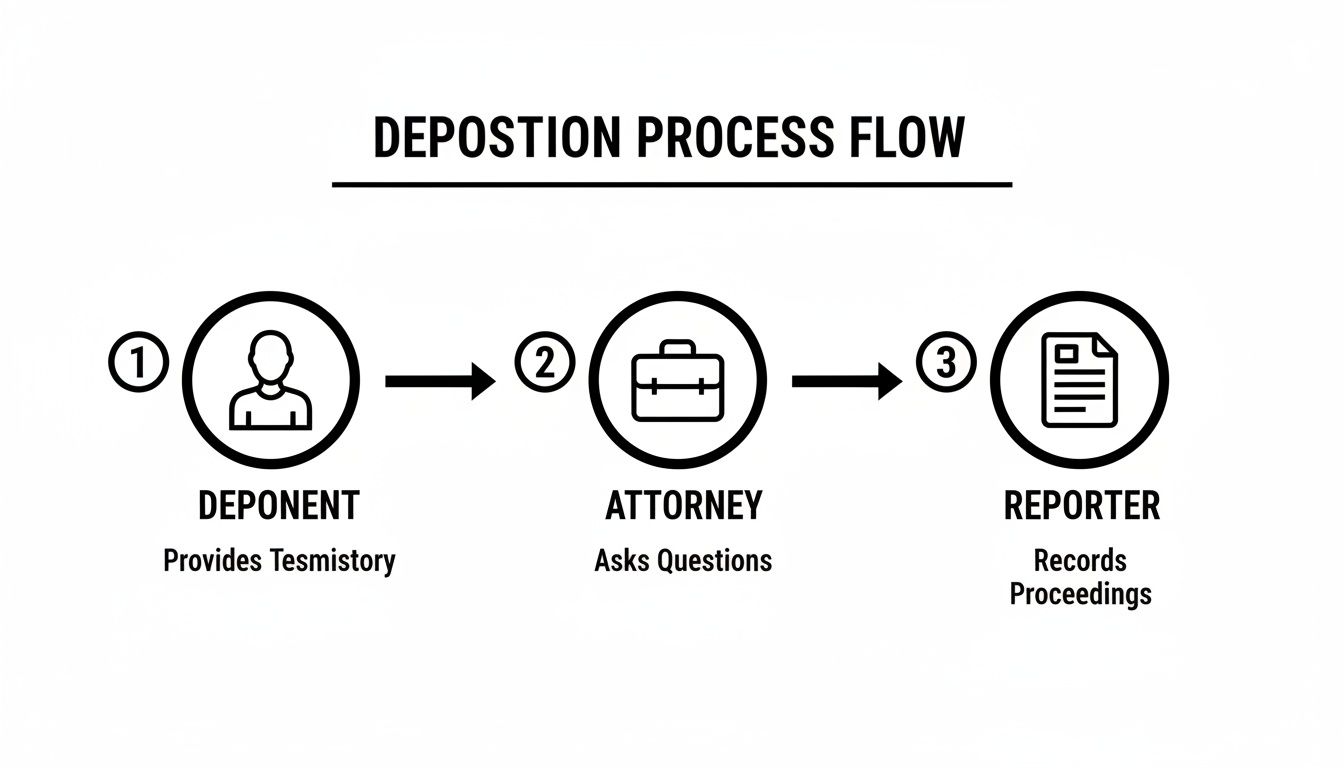
As you can see, you (the deponent) are at the center of the process. Your attorney is your advocate, and the court reporter is the neutral party capturing every word.
Your attorney can help you prepare for the deposition and discuss what you might expect based on the specifics of your case.
Concluding the Session and Reviewing the Transcript
Once the main lawyer is done, any other attorneys in the room might ask a few follow-up questions. When everyone has finished, the deposition officially concludes for the day.
But the process isn't over just because the questioning has stopped. The spoken words now need to be turned into an official, unchangeable written record.
A court reporter’s job is to capture everything said, and they may use professional audio transcription services to create an accurate written transcript. You will have a chance to read through this entire document to check for any mistakes. If you find something that was transcribed incorrectly, you can note the correction before signing. This final, signed transcript becomes the official record of your testimony.
Common Deposition Dos and Don'ts
While your attorney is the best source for specific advice for your case, some general best practices can help ensure testimony is clear and accurate. Think of these as universal guidelines for effective communication under oath.
| Listen to the full question before answering. | Don't guess or speculate. It's okay to say, "I don't know." |
| Pause before you speak. This gives you time to think and your lawyer time to object. | Don't volunteer extra information. Only answer the question asked. |
| Ask for clarification if you don't understand the question. | Don't argue with the opposing counsel. Stay calm and professional. |
| Keep your answers short and direct. | Don't be afraid to take a break if you feel tired or overwhelmed. |
| Always tell the truth. | Don't let the other attorney put words in your mouth. |
These are general informational tips. The goal is to provide truthful, accurate answers to the questions you are asked.
How Your Deposition Testimony Can Shape Your Case
Once you walk out of the deposition room, the testimony does not just sit in a file. It immediately becomes one of the most powerful tools in the entire lawsuit, influencing everything that happens from that moment on. The answers given can alter the course of a case, both during settlement talks and, if it comes to it, in the courtroom.
Think of the deposition transcript as a locked-in version of the facts from your perspective. It gives both legal teams a clear, on-the-record account of your story, which they will use to assess the strengths and weaknesses of the case.
Pushing the Case Toward Settlement
Deposition testimony can become a huge factor in settlement negotiations. Many civil cases do not go to trial; they settle out of court. A deposition is an event that can facilitate this.
Why? Because after the key players have been deposed, everyone has a clearer picture of the evidence and how a witness might come across to a jury. This new clarity can close the gap between what one side thinks a case is worth and what the other side thinks it's worth, opening the door for a serious conversation about settling.
A deposition puts information on the table. When testimony clearly and convincingly lays out the facts, it encourages the other side to realistically assess their chances at trial. This can bring them to the negotiating table.
On the flip side, if a witness gives testimony that is confusing or contradictory, it might expose a weak spot in their case, pushing them to settle to avoid the risk of losing at trial. Either way, the deposition can move the needle.
Becoming a Powerful Tool at Trial
If a case does not settle and heads to trial, that deposition transcript becomes critical. The attorneys on both sides may rely on it heavily in the courtroom.
Here are a few of the ways it can be used:
- Highlighting a Contradiction: This is a classic courtroom moment. If a witness says one thing on the stand at trial but said something different in their deposition, the opposing lawyer can use the transcript to "impeach" them. They might read the conflicting deposition testimony out loud to show the jury that the witness's story has changed, which can damage their credibility.
- Replacing a Witness Who Is Unavailable: Sometimes a crucial witness cannot make it to the trial—perhaps they are very ill, live out of the country, or have passed away. In those situations, lawyers may be able to read portions of their deposition testimony directly into the court record. It can become official evidence, just as if the person had said it live in court.
- Refreshing a Witness's Memory: Trials can happen years after the events in question. If a witness is on the stand and cannot quite remember a specific detail, an attorney may hand them a copy of their deposition transcript to refresh their memory.
Basically, a deposition creates a permanent, sworn record of a story. Every answer is locked in. This is why it’s so important to be careful, honest, and accurate. The words said in that conference room have a long reach and can echo all the way to a jury box.
Practical Tips for Giving Your Best Testimony
Stepping into a deposition can be intimidating, but preparation can help. Your lawyer can give you advice tailored to the specifics of your case, but a few universal rules of thumb can help you navigate the process with more confidence.
Above all, testimony must be honest and accurate. This isn't a memory test; it's about providing the most truthful answers possible based on what you actually know. Keep it direct and stick to your personal knowledge.
The Ground Rules for Clear Testimony
What you don't say is often as important as what you do say. A crucial skill to bring to a deposition is the ability to listen. Take a breath before you answer any question. This not only lets you process what was asked but also gives your own attorney time to object if the question is out of line.
Here are a few core principles that can be helpful:
- Don't Be Afraid to Ask for a Do-Over: If you don’t understand a question because it's confusing, long, or uses jargon, just say, "Can you please rephrase that?" It is important to understand what is being asked.
- Answer Only the Question Asked: Do not fall into the trap of volunteering extra details or explaining your answer. If a simple "yes" or "no" is a complete and honest answer, leave it at that.
- "I Don't Know" Is a Perfectly Good Answer: If you don't know something, say so. If you can't recall a specific detail, "I don't remember" is the correct response. Never guess or speculate. Making something up can seriously damage your credibility.
Your job is to be a truthful witness, not a storyteller. The most powerful testimony is often the simplest—just the facts, based on what you know. This creates a clean, reliable record that stands up to scrutiny.
Don't forget that your appearance matters, too. For some practical information, check out our guide on what to wear to a deposition. And as depositions increasingly happen online, it's also helpful to understand the strategies for conducting video conferencing depositions to ensure the technology doesn't get in the way of your testimony.
Got Questions? Here Are Some Real-World Answers.
Even after you know the basics, the idea of a deposition can still feel a little fuzzy. Let's walk through a few of the most practical questions that may arise.
What If I Can't Make My Scheduled Deposition?
Life happens. A sudden illness or a family emergency can occur. So, can a deposition be rescheduled? It is often possible, but you have to act fast.
The moment you know you have a serious conflict, tell your attorney. They will handle reaching out to the other side's lawyer to find a new date that works for everyone. Failing to appear without making these arrangements can cause serious problems for a case.
How Long Am I Going to Be There?
This is a very common question, and the honest answer is: it depends. The length of a deposition is related to the complexity of the case. A straightforward case might wrap up in a couple of hours. But if a case involves a long timeline or a complicated medical history, it could take a full day or even longer.
Remember, you are allowed to take breaks. It's not an endurance test. If you're getting tired, need to use the restroom, or just want to clear your head for a moment, let your attorney know. You can ask for a short break when you need one.
Think of it as a marathon, not a sprint. The goal is to give accurate, consistent testimony. Taking breaks helps you stay sharp and avoid the kind of fatigue that can lead to mistakes.
So, What Happens When It's Over?
Once the last question is asked, your part in the room is done for the day. The court reporter then gets to work, creating a full written transcript of everything that was said. You and your attorney will get a chance to read it over carefully to make sure it’s accurate.
If you spot any typos or errors, you can list them on a correction sheet (called an "errata sheet") before you sign off on it.
A deposition is a major milestone, but it's not the end of the road. The other side will likely depose other witnesses, and your lawyer will use your testimony to sharpen the strategy for your case. This new information can fuel the next steps, whether that’s pushing for a settlement, heading to mediation, or preparing for trial.
Understanding your rights and the legal process is the first step toward protecting your future. The experienced attorneys at Bell Law are here to guide Oregonians through the complexities of personal injury, workers' compensation, and Social Security Disability claims. If you've been injured and have questions about what comes next, contact us for a consultation. Learn more at https://www.belllawoffices.com.
Disclaimer: The information on this page is provided for general informational purposes only and is not legal advice. Reading this content does not create an attorney-client relationship. For advice about your specific situation, please contact a licensed attorney.