
What to Wear to a Deposition: A Practical Guide
"I was satisfied once John Bell took over my case."
"Communication was always timely."
What to Wear to a Deposition: A Practical Guide
Dressing for a deposition isn't about making a fashion statement. It's about showing respect for the legal process and being taken seriously. A general guideline is to opt for conservative, business-casual attire. Think slacks with a button-down shirt or a modest blouse. This approach helps ensure the focus stays where it should be: on your testimony.
Why Your Deposition Attire Matters
Walking into a deposition can be a new experience. While what you say is what truly counts, your appearance is the first thing others in the room may notice. Choosing your outfit thoughtfully can be a simple but powerful way to boost your own confidence and feel more in control. It's a non-verbal signal that you're taking the matter seriously.

The goal is to appear professional and reliable. This conveys respect for the attorneys, the court reporter, and the process itself. Your clothing should blend into the background, not become a distraction. A clean, neat, and conservative outfit allows your words to have the impact they deserve.
The Power of a First Impression
First impressions are formed in seconds. A deposition is no different. While the substance of your testimony is paramount, your clothing helps set the tone for the proceeding. Showing up looking put-together can project an image of credibility and trustworthiness before you answer the first question.
This isn't just a legal-world quirk. Some workplace studies have suggested a link between overly casual attire and a dip in professional conduct, which indicates that what we wear can influence how seriously we're perceived. Many of the same principles can be found in these interview attire guidelines, which are a useful resource for understanding professional presentation.
Your attire is part of your overall presentation. A conservative and professional outfit helps communicate that you are credible, respectful of the legal process, and ready to provide clear, focused testimony.
Setting a Respectful Tone
Dressing appropriately is also a clear sign of respect for the seriousness of the legal system. It shows the opposing counsel and everyone else in the room that you understand the gravity of the situation. This simple gesture can go a long way in establishing a professional atmosphere right from the start.
Of course, choosing what to wear is just one piece of the puzzle. By carefully considering your attire, you’re taking an active role in how you are perceived, freeing you up to focus on what matters most: providing clear and truthful answers with confidence.
What to Wear to Your Deposition
Figuring out what to wear to your deposition shouldn't add to your stress. Think of it this way: your clothing is a non-verbal part of your testimony. The goal is to present a polished, conservative image that says you're taking this process seriously. You may already have what you need right in your closet.
Aim for classic business casual. This isn’t the time for bold fashion statements. Instead, consider neutral colors like navy, charcoal, gray, and tan. These colors are understated and help keep the focus where it belongs: on your words.
Outfit Ideas for Men
For men, putting together a solid deposition outfit can be straightforward. The key is to look neat, put-together, and professional.
- Shirt: A long-sleeved, button-down shirt is a good choice. Consider a solid white or light blue, or perhaps a very subtle, conservative pattern.
- Pants: Dress slacks in a neutral color like gray, navy, or khaki are a good option. Making sure they are clean and pressed can help you look prepared.
- Jacket (Optional but Recommended): Adding a simple blazer or sport coat is an easy way to elevate your look and add a layer of professionalism. Deposition rooms can also be cool, so it can be practical, too.
Outfit Ideas for Women
Women have a few more options, but the guiding principle is the same: keep it conservative and professional. The focus should be on modest cuts and classic styles. For a deeper dive into this, you can find some great advice on how to dress business casual for women with confidence and style.
- Top: A conservative blouse or a simple shell top works well. Consider avoiding anything with a low neckline or distracting patterns.
- Pants or Skirt: Dress slacks or a knee-length skirt in a solid, neutral color can provide a clean, polished look.
- Jacket or Cardigan: A tailored blazer or a simple cardigan is a great finishing touch. It pulls the outfit together and, just like for men, provides warmth in an over-air-conditioned room.
Office dress codes have relaxed significantly over the years. A Gallup poll showed that only about 3% of workers wear a full suit to their job these days.
However, that same poll found that 51% of women and a large number of men still dress business casual for professional environments. The legal world, in particular, often holds on to more traditional standards. What you wear can signal respect for the process.
A helpful tip? Keep it simple and professional. Your outfit should be comfortable enough to sit in for a few hours but formal enough to show you understand the gravity of the situation. If you're on the fence, it may be better to be a little overdressed than underdressed.
Here's a quick reference guide to help you pull it all together.
Deposition Attire Quick Reference Guide
This table summarizes the core ideas to help you quickly choose an outfit that conveys confidence and respect.
| Tops | Solid-color button-down shirts, conservative blouses, simple shells. | T-shirts, tops with logos or graphics, low-cut or revealing styles. |
| Bottoms | Dress slacks, khakis, knee-length skirts in neutral colors. | Jeans, shorts, sweatpants, mini-skirts, athletic wear. |
| Outerwear | Tailored blazer, sport coat, simple cardigan. | Hoodies, denim jackets, overly casual or worn-out jackets. |
| Colors | Navy, gray, charcoal, tan, white, light blue. | Bright, flashy colors (neons), busy patterns, all-black. |
| Shoes | Polished dress shoes, loafers, flats, low heels. | Sneakers, sandals, flip-flops, stilettos, worn-out shoes. |
By choosing a classic, professional outfit, you walk into your deposition feeling prepared and confident. The point isn’t to win a fashion award; it’s to present yourself as a credible, serious person. Remember, your attorney is your best resource—don't hesitate to ask for their opinion based on your specific situation.
The Details That Make a Difference: Grooming and Accessories
Your outfit is sorted, but what about the finishing touches? A polished appearance goes far beyond just your shirt and slacks. The small details in your grooming and accessory choices are what pull your entire look together, ensuring it’s both cohesive and understated.
Remember, your words should be the center of attention, not a distracting piece of jewelry or an unkempt hairstyle. These final details signal to everyone in the room that you’re organized, serious, and respect the legal process you’re a part of.
Grooming Your Way to a Professional Look
Simple, clean grooming is often an overlooked part of deposition prep, but it's crucial for presenting yourself well. You don’t need a fancy salon visit; just pay attention to the basics to look put-together from head to toe.
- Hair: Your hair should be neat, tidy, and—most importantly—out of your face. Whether it’s long or short, style it conservatively so you aren't constantly pushing it aside.
- Facial Hair: If you have a beard or a mustache, make sure it’s freshly and neatly trimmed.
- Nails: This is a small detail that people can notice. Make sure your fingernails are clean and trimmed. It’s a simple sign of preparedness.
This visual guide breaks down the foundational elements of deposition attire for both men and women.
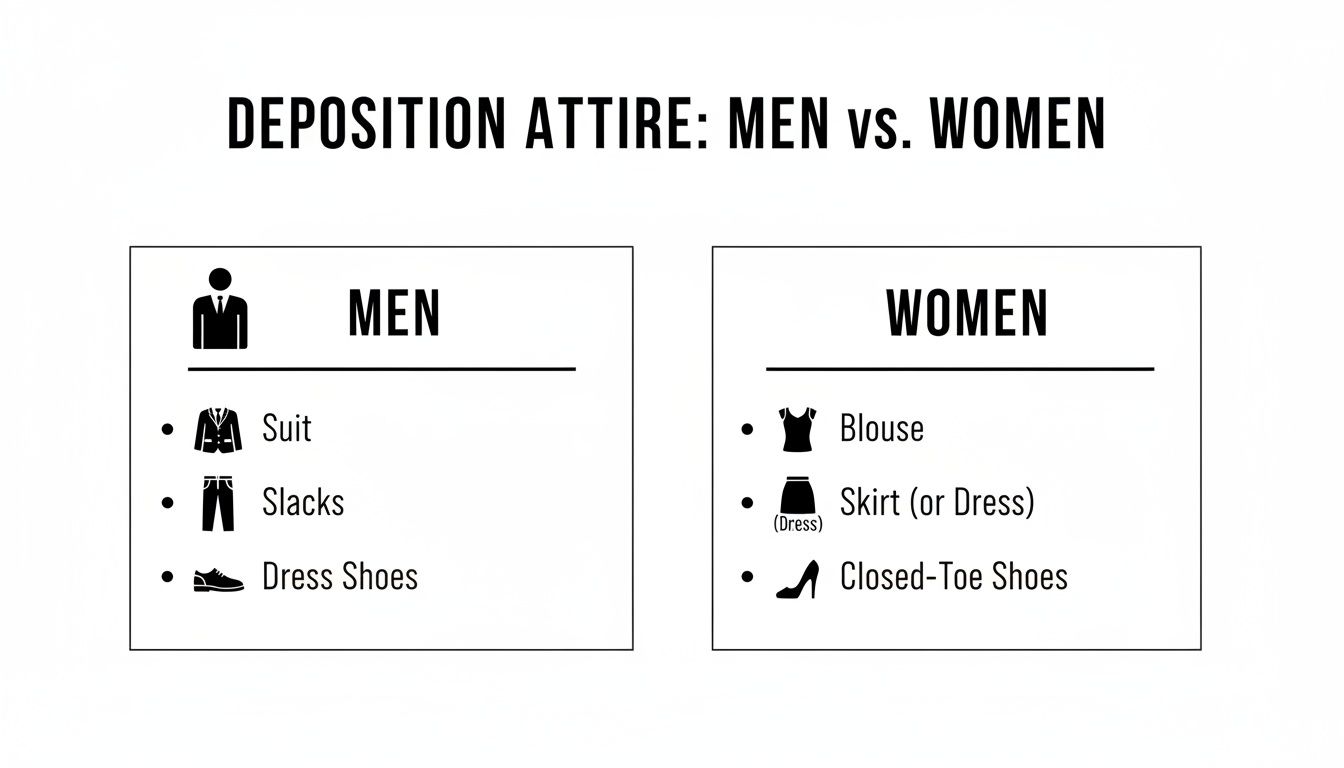
While individual styles vary, the core principle is the same for everyone: keep your clothing professional and conservative.
Keep Accessories Simple and Understated
When you're choosing accessories for your deposition, remember one rule: less is more. Your goal is to eliminate anything that could distract from your testimony.
Consider leaving flashy or noisy items at home. This could mean large, dangling earrings, chunky necklaces, or stacks of bracelets that might jangle every time you move your hands. A simple watch and a wedding band are perfectly acceptable.
A conservative approach to accessories helps maintain a professional tone. Strong perfumes or colognes can be distracting in a small conference room, so it may be best to avoid wearing any fragrance on the day of your deposition.
The same idea applies to makeup—consider keeping it minimal and natural. By toning down your grooming and accessories, you send a clear message: you’re here for a serious purpose. These thoughtful details are a key part of the bigger picture of preparing for your deposition and presenting yourself as a credible, trustworthy person.
What Not to Wear to Your Deposition
Sometimes, the easiest way to figure out what to wear is to first figure out what not to wear. Think of it as a process of elimination. Once you remove all the items that could send the wrong message or create a distraction, what’s left in your closet is often a safe, solid choice.
You don't want a piece of clothing to become a talking point or undermine your credibility. By setting aside the wrong items first, you can choose your final outfit with confidence, knowing you look the part for a serious legal proceeding.
Clothing to Leave in the Closet
Many clothes that are perfectly fine for daily life—even for a casual office—may not work in a deposition. The defense attorney's office might have a laid-back vibe, but your standard may be different.
Here are a few common items that you may want to avoid:
- Jeans and Denim: Even if they are your nicest pair, jeans of any kind are often seen as too casual for a legal setting.
- T-shirts and Graphic Tees: This is a big one. Anything with a logo, brand name, slogan, or picture is an immediate "no." A plain t-shirt, while better, is still very informal.
- Athletic Wear: This includes your favorite hoodie, comfortable yoga pants, track pants, and sneakers. These pieces can signal that you aren't taking the deposition seriously.
- Shorts and Skorts: Regardless of the weather outside, shorts are not appropriate for a legal proceeding. Stick with full-length slacks or a professional, knee-length skirt.
Why this caution? Because these items can subtly communicate a lack of respect for the process. Your clothing should silently say, "I understand the importance of today, and I am here to be taken seriously."
Someone showing up in a casual outfit because they heard the opposing attorney wears jeans to the office is not a good idea. Your standard is professional. Your appearance is a non-verbal way of showing how seriously you're taking your own case.
Avoiding Potentially Distracting Styles
Beyond specific articles of clothing, you also need to think about the overall style. The best deposition outfit is a conservative one—it’s just not the time or place to make a fashion statement.
Pay close attention to how your clothes fit. Anything that is overly tight, revealing, or flashy can make people in the room uncomfortable and, more importantly, distract them from your testimony. The same goes for footwear; open-toed shoes like sandals and flip-flops are out. A simple closed-toe dress shoe, loafer, or flat is a safer and more professional bet.
Attire to Avoid a Simple Checklist
To make it even easier, here is a quick checklist of things to avoid. Run through this list as you're getting ready to make sure you haven’t missed anything.
| Logos or Slogans | Can be distracting and may send an unintended message. |
| Flashy or Noisy Jewelry | Creates both visual and auditory distractions that pull focus. |
| Overly Casual Shoes | Flip-flops, sneakers, or scuffed-up shoes look unprofessional. |
| Revealing Attire | Low-cut tops, short skirts, or overly tight clothing are inappropriate. |
| Strong Fragrances | Perfume or cologne can be overpowering in a small conference room. |
By sidestepping these common mistakes, you ensure your appearance is polished, respectful, and completely neutral. This simple preparation helps you walk into that room feeling composed and ready to focus on what really matters: your testimony.
What If My Situation Is a Little Different?
Life happens, and sometimes a standard "business casual" outfit may not work for your situation. Don't worry. The key is to adapt thoughtfully, so you can stay comfortable and focused on your testimony without sacrificing a professional appearance.
If you have an injury, your primary goal is to accommodate your medical device. A cast, a sling, or a brace can make getting dressed a challenge, but it's not impossible to look put-together.

Think practically. A button-down shirt is much easier to get on over an arm sling than a pullover sweater. For a leg brace or walking boot, look for wider-leg dress pants that can fit over the device comfortably. The goal is simply to choose clean, conservative clothing that works with your current physical needs, not against them.
What About Virtual Depositions?
More and more, depositions are happening over video calls. While it’s tempting to stay in your sweatpants when you’re at home, it's important to treat a virtual deposition with the same respect as an in-person one.
- Look the Part: At the very least, dress professionally from the waist up. A simple blazer, a nice blouse, or a button-down shirt tells everyone on the call that you're taking this seriously.
- Mind Your Background: A cluttered room or a distracting poster in the background can undermine your credibility. Find a spot with a neutral wall or a tidy, professional-looking bookshelf behind you.
- Do a Tech Check: Log in a few minutes early to check your camera angle, make sure your audio is clear, and adjust your lighting. You want the light source in front of you, not behind, so everyone can see your face clearly.
Just because you're at home doesn't mean it's informal. A virtual deposition is a formal legal proceeding, and your appearance and environment should reflect that you understand its importance.
Finding the Balance Between Professional and Comfortable
Let's be honest—depositions can drag on for hours. While looking professional is the top priority, being physically uncomfortable can be a huge distraction when you’re trying to focus.
The perfect deposition outfit strikes a balance. Pick fabrics that breathe and clothes that don't feel tight or restrictive when you're sitting for a long time. Layering is your best friend here. A blazer or cardigan is perfect because you can easily take it off if the room is too warm or put it on if the AC is blasting. You want an outfit you can put on and then completely forget about.
Dressing appropriately is just one piece of the puzzle. To feel fully prepared for the day, take some time to learn more about how to prepare for a deposition and walk in with confidence.
Still Have Questions About Your Deposition Outfit?
It’s completely normal to have a few lingering questions even after you’ve picked out what you think is the right outfit. Let's tackle some of the most common concerns to help you feel confident in your choice.
Do I Really Need to Go Out and Buy a Suit?
No. You don't need to spend money on an expensive new outfit for your deposition. The goal here is to look put-together and serious, not to show off a new wardrobe.
A simple, well-fitting outfit you already have is a great choice. What matters is showing you respect the legal process, and you can do that perfectly with clean, conservative clothes you're already comfortable in.
What if I Have Visible Tattoos?
This is a common question. Generally, it can be a good idea to cover visible tattoos if you can do so comfortably. A long-sleeved shirt, a higher neckline, or even opaque stockings can often do the trick.
The idea is to keep the focus entirely on your testimony, removing anything that could potentially distract the other side. This is a great thing to bring up with your attorney; they can give you information tailored to your specific situation.
When in doubt, it’s often better to be a little overdressed than too casual. Aiming for a business casual look is a safe bet that shows everyone in the room you’re taking this seriously.
How Do I Dress for a Deposition in Really Hot or Cold Weather?
Think in layers. This is an excellent strategy for dealing with unpredictable weather and even more unpredictable office thermostats.
For a hot day, you might wear a lightweight blouse or a crisp button-down shirt and bring a blazer or cardigan you can take off if the room gets stuffy. When it's cold, a professional-looking sweater under a jacket works perfectly. Deposition rooms can be either cool or warm, so being able to adjust will help you stay comfortable and focused.
Is It Really Better to Be Overdressed Than Underdressed?
Yes. In a legal setting, it's the safer and smarter route. Showing up in something too casual—like a t-shirt or very informal clothes—can be misinterpreted as disrespect or a sign that you aren't appreciating the gravity of the situation.
By choosing an outfit on the spectrum of business casual, you immediately present yourself as a credible person who understands and respects the formal nature of the deposition.
Navigating the complexities of a personal injury claim requires more than just knowing what to wear. At Bell Law, our experienced attorneys guide clients through every step of the process, from deposition preparation to settlement negotiations. If you've been injured and need dedicated legal support in Oregon, we're here to help. Contact us for a consultation.
Disclaimer: The information on this page is provided for general informational purposes only and is not legal advice. Reading this content does not create an attorney-client relationship. For advice about your specific situation, please contact a licensed attorney.