
Finding a Workers Comp Attorney Oregon Your Essential Guide
"I was satisfied once John Bell took over my case."
"Communication was always timely."
Finding a Workers Comp Attorney Oregon Your Essential Guide
If you've been hurt on the job in Oregon, you may be wondering what comes next. A workers comp attorney can be a guide through a system that, while designed to provide support, can feel confusing and overwhelming right when you're most vulnerable.
This system is meant to be a safety net, providing critical medical care and wage support. But understanding the general process can be key.
Understanding Oregon’s Workers' Compensation System

Oregon's workers' comp system can be thought of as a type of trade-off. Employers are required by law to carry this special type of insurance. If a worker gets hurt because of their job, this insurance is intended to cover medical bills and a portion of their lost pay.
In exchange for these benefits, employees generally cannot sue their employer for a personal injury claim. It's a system designed to provide a more direct path to getting help without lengthy court battles.
A fundamental part of this system is that it's a ‘no-fault’ system. This means a worker may receive benefits even if their own actions contributed to the accident. The system is not focused on assigning blame; it is concerned with whether the injury is connected to the job.
What Is a "Work-Related Injury?"
For a claim to be accepted, the injury or illness must "arise out of and in the course of employment." This is a key legal phrase at the heart of every claim.
What it means is that the medical condition has to be linked to job duties. This could be a sudden, obvious accident—like falling from a ladder or injuring your back while lifting a heavy box.
But it also covers conditions that develop slowly over time, such as a data entry clerk developing carpal tunnel syndrome or a warehouse worker's shoulder wearing out from years of repetitive motion. The key is establishing the connection between the work and the health condition.
Types of Support Available
The goal of the system is to help you get better and back on your feet. To do that, it provides several kinds of potential benefits, each designed to address a different need during recovery.
- Medical Services: This is often the most immediate need. Workers' comp can cover reasonable and necessary medical care for the injury. That can include everything from the initial emergency room visit and doctor's appointments to surgery, prescriptions, and physical therapy.
- Wage Replacement Benefits: If you can't work while you heal, time-loss payments are designed to replace a portion of your lost wages, providing financial stability during your recovery period.
- Permanent Disability Benefits: Sometimes, an injury leaves a lasting impact. If you don't make a full recovery and are left with a permanent impairment, you may be entitled to an award to compensate for that loss.
The entire process is handled through a formal claims procedure. From reporting the injury to filing the right forms, every step has specific rules and deadlines that are important to follow.
Trying to manage this process while you're in pain and worried about your future can be a heavy burden. You may be dealing with your employer, doctors, and the insurance company, all of whom have their own priorities. To get a better sense of what to expect, you can learn more about the specific steps in our guide to the workers comp claim process.
Having an experienced workers comp attorney in Oregon on your side can make a significant difference in navigating the process and protecting your rights.
When Should You Call a Workers' Comp Attorney?

Not every workers' comp claim requires a lawyer. For a minor injury with a quick recovery, you might be able to handle the paperwork on your own. But when things get complicated, the system can quickly feel like it's working against you.
Knowing when to ask for help is an important consideration. This isn’t about picking a fight; it’s about leveling the playing field and making sure your rights are protected when the stakes are high.
Your Claim Gets Denied
Receiving a denial letter in the mail can be very disheartening. The insurance company might state your injury didn't happen at work, you missed a deadline, or provide other reasons. It can feel like a dead end.
A denial is one of the clearest signals that you may need to call a workers comp attorney in Oregon. An attorney can review the denial, determine why it happened, and build a strategy for an appeal. They know the deadlines, the evidence needed, and how to present your case.
The Insurance Company Is Disputing Your Injury or Treatment
The insurance company may begin to question aspects of your claim. They might send you to a doctor of their choosing for an "Independent Medical Examination" (IME), and that doctor’s opinion could clash with what your own physician recommends.
Disputes can arise over what treatments are necessary, the severity of your injury, or whether you are ready to return to work. Your employer might also push back against the work restrictions your doctor gave you.
An experienced attorney can step in to manage these communications. They can help ensure your medical evidence is solid and advocate for the care your own doctor recommends, not just the care the insurance company wants to pay for.
Your Injury Is Severe or Someone Else Was at Fault
If your injury is a life-changing one that could result in a permanent disability or require long-term care, the complexity of your claim increases significantly. Figuring out the potential cost of future medical care and lost earning potential is not simple math.
And what if your injury was caused by someone who wasn’t your boss or a coworker? For example, a delivery driver hit by another driver, or a factory worker injured by a faulty machine. This is called a third-party claim. This could mean you have a workers' comp claim and a potential personal injury lawsuit against the person or company that was at fault.
- Permanent Disability: You may need someone who understands how to pursue compensation that reflects a permanent change to your life and ability to work.
- Third-Party Liability: Juggling two separate legal cases can be incredibly tricky. An attorney can help ensure one doesn't negatively impact the other.
The Settlement Offer Seems Low (or You’re Worried About Legal Fees)
If the insurer presents a settlement offer, how do you know if it’s fair? It can be tempting to accept a lump sum, but a low offer may not cover future medical bills or the full impact of a permanent impairment.
Many people hesitate to call a lawyer because they worry about the cost. In Oregon, the system is set up to be accessible. There are often no upfront fees. Attorneys may be paid a percentage of the benefits they win for you, meaning their goal is aligned with yours: to achieve a favorable outcome.
Per Oregon's Bulletin 356, attorney fees are regulated. For disability awards, they typically receive a portion of the increase in compensation they secure. You can learn more about the compensation rates for legal professionals to see how it works. A workers comp attorney in Oregon generally only gets paid if they make a positive difference in your case.
How an Attorney Supports Your Oregon Workers Comp Claim

After a work injury, your main job should be to get better. But you may suddenly face a mountain of paperwork, confusing legal jargon, and strict deadlines. It can feel like a full-time job you never asked for. This is where a workers comp attorney in Oregon can step in to take that burden off your shoulders.
An attorney can act as the project manager for your recovery. They can handle the complex legal and administrative tasks so you can focus on your health. They can become your guide through the system and your advocate when dealing with insurers.
Building a Solid Foundation for Your Claim
A successful workers' comp claim is about more than just filing a form; it's about building a case. The foundation of that case is evidence—clear, compelling, and correctly organized. One of the first things an attorney may do is gather the proof needed to connect your injury directly to your job.
This is far more than just collecting doctor's bills. Your lawyer knows what the insurance company and the Workers' Compensation Board may look for. They work to ensure your medical records tell the complete story of your injury, your treatment, and any limitations you now face.
This critical groundwork can include:
- Rounding Up Medical Records: Systematically collecting every report, lab result, and doctor's note that's relevant to your case.
- Securing Expert Opinions: Strengthening a claim might require bringing in a vocational expert or a medical specialist to provide a professional opinion on your condition or ability to work.
- Calculating Lost Wages: Carefully documenting your pay history to make sure your time-loss benefits are calculated accurately.
Managing All the Paperwork and Phone Calls
Talking to an insurance adjuster can be stressful. Their goal is to protect their company's interests. When you hire an attorney, they take over as the single point of contact for the insurance company.
This can be a game-changer. No more fielding tricky phone calls or feeling pressured to give a statement that could be used against you later. Your attorney can handle it all, making sure every communication is strategic and protects your rights.
By taking charge of all correspondence, your lawyer ensures every form is filed correctly and on time. This meticulous organization can prevent simple mistakes that could otherwise delay or derail your claim.
They speak the language of workers' compensation, translating complicated insurance requests into simple, clear instructions for you.
Representing You When It Counts Most
What happens if your claim gets denied? Or if there's a dispute over the benefits you're owed? Your case could move into a formal hearing or mediation. This is where having an experienced advocate is essential.
A workers comp attorney in Oregon will prepare your case from top to bottom. They can interview witnesses, help you prepare for your testimony, and build a persuasive legal argument. In a hearing, they are your voice—presenting evidence, cross-examining witnesses, and fighting for your rights before the judge.
Having a professional in your corner levels the playing field. They can ensure the rules are followed and that your story is told clearly and powerfully, giving you a better chance at a fair outcome.
Here’s a quick breakdown of what an attorney does for you.
Key Responsibilities of a Workers' Comp Attorney
| Case Evaluation | You get an honest assessment of your claim's strengths and weaknesses from an expert. |
| Evidence Gathering | Your attorney collects all the necessary medical records and work documents to build a strong case. |
| Communication Management | You no longer have to speak directly with the insurance adjuster; your lawyer handles all calls and emails. |
| Deadline Tracking | All filing deadlines are monitored, preventing your claim from being dismissed on a technicality. |
| Benefit Calculation | They ensure your wage loss and disability benefits are calculated correctly and you're not underpaid. |
| Negotiation with Insurer | Your attorney negotiates on your behalf to secure a fair settlement. |
| Hearing Representation | If your case goes to a hearing, you have a skilled advocate presenting your case to the judge. |
| Appeal Filings | If a decision is unfavorable, they will handle the entire appeals process for you. |
Ultimately, their job is to absorb the stress and complexity of the legal process, allowing you to focus on what truly matters: your health and recovery.
Navigating Critical Deadlines and the Appeals Process
The Oregon workers' compensation system runs on a very tight schedule. From the moment you get hurt, a series of invisible clocks start ticking. Missing one of these deadlines could jeopardize your claim, which is why acting quickly is so important.
You don't need to memorize every single date, but it is helpful to understand the urgency. Your first and most important step is to report your injury to your employer. That single act officially kicks off the entire process. From there, other key deadlines for filing your claim will follow. A workers comp attorney in Oregon can be your calendar keeper, making sure every box is checked on time.
Why Timing is Everything
The deadlines in a workers' comp claim are like the rules of a board game. If you miss a turn, you might lose your chance to make a critical move. Every single step, from that first injury report to filing an appeal, has its own strict time limit.
If you miss a deadline, the insurance company could use it as a legal reason to deny your claim, regardless of the seriousness of your injury. This is why paying close attention to the calendar is vital. An attorney can help figure out these dates precisely, sometimes using tools for calculating business days for deadlines to be certain.
What to Do When Your Claim is Denied
Getting a denial letter in the mail can feel like a gut punch. It's incredibly discouraging, but it’s not always the final word. The system in Oregon has a formal, multi-stage appeals process built right in, giving you a chance to challenge the insurance company’s decision.
When your claim is denied, the insurer must send you a letter explaining why. Hold onto this document—it’s crucial because it lays out their exact reasoning. They might state you missed a deadline, argue the injury didn't happen at work, or disagree with your doctor's medical assessment.
A denial isn't necessarily the end of your claim. It can be the start of the next chapter. The key is to understand your options and act fast.
The first steps to challenge that denial are extremely time-sensitive. You only have a small window to formally request a review. We cover this in more detail in our guide on how to appeal a workers' comp denial.
An Overview of the Appeals Roadmap
If your claim gets denied, the path forward involves a structured legal journey. While every case has its own unique twists and turns, the general progression provides several opportunities to make your case.
Request for Hearing: The first step is filing an appeal, which triggers a hearing in front of an Administrative Law Judge (ALJ). This is a formal legal proceeding where you and the insurance company present evidence.
Workers' Compensation Board Review: If you (or the insurer) disagree with the judge's decision, the next step is to ask the Workers' Compensation Board to review it. The Board examines the evidence and the ALJ's ruling to see if any legal mistakes were made.
Further Court Appeals: In some cases, a decision from the Board can be appealed even higher, up to the state courts. These appeals tend to focus on complex legal interpretations, not just the facts of your injury.
This step-by-step process is why a denial letter shouldn't make you give up. With the right help, an initial "no" can sometimes be turned into a "yes."
How Much Does a Workers' Comp Attorney Cost in Oregon?
Let's get straight to the biggest question on most people's minds: "Can I actually afford a lawyer?" When you're already dealing with medical bills and no paycheck, the thought of adding legal fees to the pile can be daunting.
The system for a workers comp attorney in Oregon is set up specifically to help people in your exact situation.
You often don't need any money upfront. Experienced workers' comp attorneys typically operate on a contingency fee basis.
It's a simple concept: the attorney only gets paid if they win your case or get you more benefits than the insurance company initially offered. Their fee is a percentage of the money they recover for you. If they don't succeed, you don’t owe them a fee. This system means your attorney’s goals are perfectly aligned with yours—the better you do, the better they do.
How "No Win, No Fee" Actually Works
The contingency model makes legal help accessible to everyone, not just those who can write a big check. It gives you the power to fight a denied claim without risking your financial future.
The key takeaway is that the attorney's fee comes out of the settlement or award they help you win, not out of your own pocket. This protects your personal finances while your case is ongoing.
Oregon law regulates this entire process to keep it fair. The state puts a cap on the percentage an attorney can charge, so you're protected from excessive fees.
If your claim is denied, you'll enter the appeals process, which is where having an attorney can be critical.
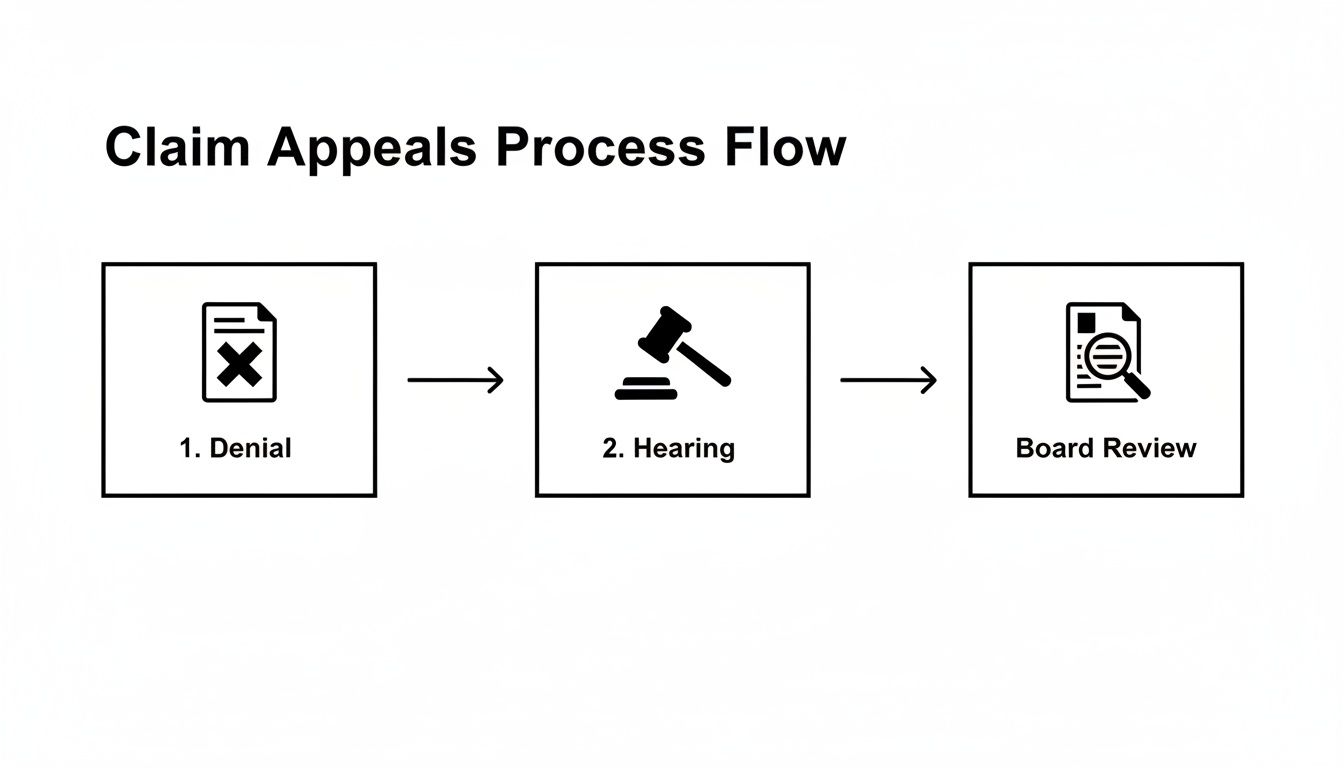
From a formal hearing all the way to a Board review, a good lawyer can guide you through each step, working to get the insurer’s decision overturned.
What’s the Typical Percentage for an Attorney?
The fee percentage isn't just some number a law firm pulls out of a hat. In Oregon, it’s set by state regulations and depends on the specific benefits your attorney helps you secure.
For instance, when it comes to Permanent Partial Disability (PPD) awards, an attorney's fee may be 25% of the increase in compensation they secure for you. For a Permanent Total Disability (PTD) award that's won through a hearing, the fee is also often 25%, but it's capped at a certain amount. These rules help ensure the system is predictable and fair.
A reputable attorney will walk you through their fee agreement in plain English before you sign anything. You should have a clear understanding of how they get paid.
Fees vs. Costs: What's the Difference?
This is a small but important detail that can cause confusion. "Fees" and "costs" are not the same thing.
- Attorney Fees: This is the payment for the lawyer's work and expertise. This is what the contingency agreement is all about.
- Case Costs: These are the direct expenses needed to move your case forward. Examples include court filing fees, paying for copies of your medical records, or hiring a medical expert to write a report.
Most of the time, your law firm will cover these costs upfront and then get reimbursed from your final settlement. It's just one more question to ask when you first meet. To dig deeper into this, you can read our guide on the cost of a workers' comp lawyer.
Finding the Right Support Across Oregon
While Oregon’s workers' compensation laws are the same for everyone, the actual experience of navigating a claim can feel different depending on where you live. Your hometown can shape everything from which doctors you can see to the logistics of attending a hearing. Local knowledge can be a real asset.
You could be in the heart of downtown Portland or a smaller community, but the core challenges of getting a claim approved and paid are universal. That said, a workers comp attorney in Oregon who knows the local area—the medical specialists, the administrative law judges, the layout of the hearing offices—may bring a distinct advantage to the table.
Local Knowledge in Key Oregon Cities
Your journey through a workers' comp claim will likely involve dealing with resources and offices clustered in regional hubs. Knowing a little about these areas can help you know what to expect.
- Portland and Clackamas: As the state's biggest metro area, this region is packed with medical specialists and legal experts. It's a common site for depositions and hearings, so simply knowing your way around can reduce stress.
- Salem: As Oregon's capital, Salem is the administrative nerve center for the workers' comp system. Major state agencies are headquartered here, and it’s a very common location for formal hearings.
- Eugene and Roseburg: These cities are vital hubs for folks in Central and Southern Oregon. Access to local doctors who understand the workers' comp documentation process can be crucial for building a solid medical file for your claim.
Why Local Connections Matter
It can be incredibly helpful to work with doctors and therapists who have experience with the workers' compensation system. They know what kind of reports, chart notes, and documentation the insurance companies and the Workers' Compensation Board need to see. They speak the language.
Having a support network that understands the local legal and medical environment can make a tangible difference. It’s about having professionals who know the system, the key locations, and the practical steps involved in managing a claim in your specific part of Oregon.
Ultimately, getting the right help means finding people who don't just know the law, but who also understand the local context of your claim. For a behind-the-scenes look at how a law practice can use its online presence to reach injured workers in a specific area, this law firm website and SEO case study offers some interesting insights.
Answering Your Oregon Workers' Comp Questions
When you're hurt on the job, you likely have many questions. That's completely normal. Let's walk through some of the most common things injured workers in Oregon want to know. Think of this as a starting point to help you get your bearings.
What’s the First Thing I Should Do After Getting Hurt?
Before anything else, take care of yourself. Your health is the top priority. That means getting the medical attention you need right away, whether it's basic first aid at the job site or a trip to the emergency room.
Once you’ve seen a doctor, you need to tell your employer about the injury. Oregon has specific deadlines for reporting, so it's important not to put this off. Making a few notes for yourself about what happened, who saw it, and how you felt can be a help later on.
Can My Boss Fire Me for Filing a Claim?
This is a big worry for many people. Oregon law makes it illegal for an employer to retaliate against an employee for filing a good-faith workers' comp claim.
These protections are built into the system for a reason—so you can focus on getting better without the added stress of losing your job.
The point is to allow you to recover without fear. Knowing you have these rights can provide some peace of mind.
What Happens if My Doctor and the Insurance Company's Doctor Disagree?
This situation is not uncommon. Your doctor might say you need a specific treatment or have certain work restrictions, but then the insurance company sends you for an "Independent Medical Examination" (IME), and that doctor says something completely different.
When there's a conflict between medical opinions, the system has a process for sorting it out. It can involve a close look at all the medical records and may sometimes lead to more evaluations. This is often where claims get complicated, and having your medical facts straight is critical.
Do I Have to See the Insurance Company’s Doctor?
You have the right to choose your own doctor in Oregon to treat your work injury. It's important to have a physician you trust managing your care.
However, there are some rules about who can be your "attending physician" in the workers' comp system. And yes, the insurance company can require you to see a doctor of their choice for an IME. Their goal with an IME is to get a second opinion on your injury and treatment plan.
The back-and-forth between your doctor's opinion and the IME report can be a central part of a contested claim. Understanding your rights about who manages your medical care is a crucial piece of the puzzle. An experienced workers comp attorney in Oregon can make these rules much clearer.
If you're dealing with a denied claim or just feel lost after a workplace injury, the team at Bell Law is ready to help. We offer experienced guidance and real support for injured workers across Oregon. Contact us today for a consultation to discuss your case.
Disclaimer: The information on this page is provided for general informational purposes only and is not legal advice. Reading this content does not create an attorney-client relationship. For advice about your specific situation, please contact a licensed attorney.