
Hiring a Workers Comp Lawyer Oregon Trusts
"I was satisfied once John Bell took over my case."
"Communication was always timely."
Hiring a Workers Comp Lawyer Oregon Trusts
When you get hurt on the job in Oregon, figuring out what to do next can be completely overwhelming. The biggest question is usually whether you need to bring in a lawyer, and frankly, the answer really depends on how complicated your situation is.
For a straightforward, undisputed claim where your employer and their insurer are on board, you might be able to handle it yourself. But if you're facing a denied claim, a serious injury, or any kind of pushback from the insurance company, a workers comp lawyer in Oregon isn't just helpful—they're essential.
Do You Really Need an Oregon Workers Comp Lawyer?

Think of the Oregon workers' compensation system like a winding river. If the water is calm and the path is clear, you might be able to paddle it on your own. But the insurance companies? They have a detailed map of this river. They know every hidden rock, swift current, and dangerous bend that you don't. A workers' comp lawyer is your expert river guide—someone who has navigated these waters hundreds of times and knows how to get you safely to the other side.
Let's look at a real-world example. A delivery driver in Eugene throws out his back lifting a heavy package. At first, his boss seems helpful, and the claim gets filed without a hitch. But then the calls from the insurance adjuster start. They begin questioning how bad the injury really is and start pushing for a quick return to "light duty" work, even though his doctor hasn't cleared him.
This is where the calm water turns into rapids. The insurance company’s job is to protect its bottom line by paying out as little as possible. Your goal is to get the care you need to recover. These two goals are fundamentally at odds. Without an experienced guide, it's incredibly easy to get pushed off course.
Red Flags That Signal You Need Legal Help
So, how do you know it's time to call in an expert? Certain things can happen that are clear signs your claim is getting too tricky to manage alone. Spotting these red flags early is the key to protecting your rights and getting the full benefits you're entitled to under the law.
You should seriously think about calling a lawyer if any of this sounds familiar:
- Your Claim is Denied: A denial letter is the most obvious sign you need professional help. Insurers can deny claims for all sorts of reasons, from a technicality like a missed deadline to arguing your injury didn't even happen at work.
- The Insurer Fights Your Doctor's Orders: Is the insurance company questioning the treatment your doctor prescribed? Are they demanding you see their doctor for a second opinion (called an IME), or pressuring you to go back to work before you're medically ready? These are major red flags.
- You Have a Serious or Permanent Injury: Cases that involve surgery, long-term disability, or any kind of permanent impairment are high-stakes. An attorney's job is to make sure any settlement properly accounts for your future medical bills and lost earning ability.
- You Get a Lowball Settlement Offer: It’s a classic move. Insurers will often toss out a quick, low offer hoping you’ll take it just to be done with the whole process. An experienced lawyer knows how to value your claim correctly and negotiate for what you truly deserve.
Trying to navigate the workers' compensation system alone is a huge risk. Insurance companies have entire teams of professionals dedicated to minimizing what they pay out; you deserve that same level of expert advocacy fighting for you.
An attorney completely levels the playing field. They take over all the frustrating calls with the insurer, gather the right medical evidence, and build a solid case to support you. For a deeper dive, our guide on when to hire a workers' comp lawyer offers even more insight.
Ultimately, hiring a lawyer means you don't have to go through this difficult time feeling alone and unprepared.
Navigating the Oregon Workers' Compensation Process
To really grasp why an experienced workers' comp lawyer is so crucial, you first need a feel for the system itself. It can seem like a confusing maze when you're hurt and stressed, but there's a logical path to follow, starting from the moment your injury happens. Knowing the steps, and who's involved, is the first move in protecting your rights.
Think of it like a cast of characters in a play. You're the main character—the injured worker. Then there's your employer, who is required to carry workers' comp insurance. The insurance company is the one that actually pays the bills. Overseeing it all is the Oregon Workers’ Compensation Board, the state agency that makes sure everyone plays by the rules.
The Claim Journey Begins
It all starts with the injury. That one event kicks off a whole chain reaction, and every step has to happen in the right order. The absolute first thing you must do is report your injury to your employer. Do it right away, even if it feels minor.
After you've reported it, the official paperwork starts.
File Form 801: Your employer needs to give you a "Worker's and Physician's Report for Workers' Compensation Claim," better known as Form 801. You fill out your part, then take it to a doctor who completes their section. This is the form that officially gets the ball rolling with the insurance company.
Employer Submits the Claim: Once you give the completed form back to your employer, they have just five days to send it to their insurance carrier.
Insurer's Decision: The insurance company then has 60 days to look into your claim and decide whether to accept or deny it. This is a critical waiting period while they review your medical records and the incident report.
At the end of that 60-day window, a letter will arrive in your mailbox. That letter is a major turning point.
Acceptance Versus Denial: What It Means for You
The decision from the insurer will set the course for everything that follows. It will be either a "Notice of Acceptance" or a "Denial," and the difference between them is night and day.
A Notice of Acceptance means the insurer agrees your injury is work-related and will start paying for medical care and lost wages. A Denial means they're refusing to cover anything, and you won't see a dime in benefits unless you fight back and win.
Getting an acceptance letter is a huge relief, but you're not done yet. You have to read that notice carefully. It will list the exact medical conditions they've accepted. Sometimes, they might accept a sprained wrist but not the shoulder injury your doctor also diagnosed.
If you get a denial, it feels like a punch to the gut, but it's not the end of the road. Insurers deny claims for all sorts of reasons—a missed deadline, a question about whether the injury happened at work, or a pre-existing condition. This is precisely the point where having a sharp legal advocate in your corner becomes essential. For a more detailed look at these steps, you can check out our overview of the Oregon workers' compensation claim process.
Understanding Key Benefit Types
When your claim is accepted, you’re entitled to specific benefits to help you get back on your feet. The two most common are time-loss payments and awards for permanent disability.
- Time-Loss Benefits: This is basically wage replacement. If your doctor says you can't work for more than three days, you're eligible for payments to cover a portion of your lost income while you recover.
- Permanent Partial Disability (PPD): This comes into play if your injury causes a permanent impairment, meaning you never quite get back to 100%. For example, a carpenter who loses some range of motion in her hand would receive a PPD award to compensate for that permanent loss of function.
Getting through these steps, from filing Form 801 to actually receiving your benefits, demands close attention to every detail and deadline. One small misstep can put the support you desperately need in jeopardy.
How a Workers Comp Lawyer in Oregon Gets Paid
When you’re hurt at work, the last thing you need is another bill. The thought of paying for a lawyer on top of medical expenses and lost paychecks is enough to make anyone hesitate, even when they know they need help.
Thankfully, Oregon’s system is built to take that worry off your plate. You don't need a pile of cash to get an expert on your side.
The entire system works on a contingency fee basis. It’s a straightforward and powerful concept: your lawyer only gets paid if they win your case. Think of it as a partnership. If they secure benefits or a settlement for you, their fee is a percentage of what they recover. If they don't, you owe them absolutely nothing for their time.
This setup means your lawyer's goals are perfectly aligned with yours. They have every incentive to fight for the best possible outcome because their payment depends on it. You won’t see any upfront retainers, hourly bills, or unexpected invoices.
The Contingency Fee Model Explained
So, what does this look like in the real world? Let’s say a roofer in Salem falls and injures his back, but the insurance company denies the claim, arguing it was a pre-existing condition. He decides to hire a workers comp lawyer in Oregon.
From that moment on, the lawyer gets to work—gathering medical files, interviewing witnesses, and preparing for a hearing. All this happens without the roofer paying a single dollar out of his own pocket.
- If They Win: The lawyer successfully proves the fall caused the injury. They secure a settlement that covers medical bills, lost wages, and compensation for permanent disability. The lawyer's fee is simply a pre-agreed percentage of that settlement.
- If They Don't Win: If, after all their efforts, the lawyer can't get the denial overturned, the roofer owes them nothing. All those hours of legal work cost him zero.
This "no win, no fee" promise removes all the financial risk. It frees you up to focus on getting better while a professional handles the fight. For a deeper dive, check out our guide on the cost of hiring a workers' comp lawyer.
This table breaks down the fee structure in a simple way.
Oregon Workers Comp Lawyer Fee Structure
| Contingency Fee | Only if your lawyer wins your case and you receive a monetary settlement or award. | A state-regulated percentage of the amount recovered. |
| Consultation Fee | Typically for an initial meeting to discuss your case. | $0 - Most Oregon workers' comp lawyers offer free initial consultations. |
| Upfront Costs/Retainer | Paid before the lawyer starts work. | $0 - This is not part of the contingency fee model. |
| Fee if You Lose | If your lawyer is unsuccessful in securing benefits. | $0 - You owe nothing for your attorney's time and effort. |
As you can see, the financial burden on the injured worker is removed, allowing everyone access to legal help.
Oregon's Legal Protections for Injured Workers
To make sure the system stays fair, Oregon law puts strict limits on what attorneys can charge in workers' comp cases. A lawyer can't just name their price; fees are capped by state regulations and must be approved by an administrative law judge or the Workers' Compensation Board.
These caps are also adjusted to keep up with the economy. For instance, the maximum fees are tied to Oregon's State Average Weekly Wage (SAWW). Due to a 6.427% increase in the SAWW, the hourly fee cap for attorneys was set to rise to $485 for work performed after July 1, 2025. You can read more about these Oregon legal fee adjustments on the state's official website.
This infographic shows the basic steps of a claim, starting from the injury itself.
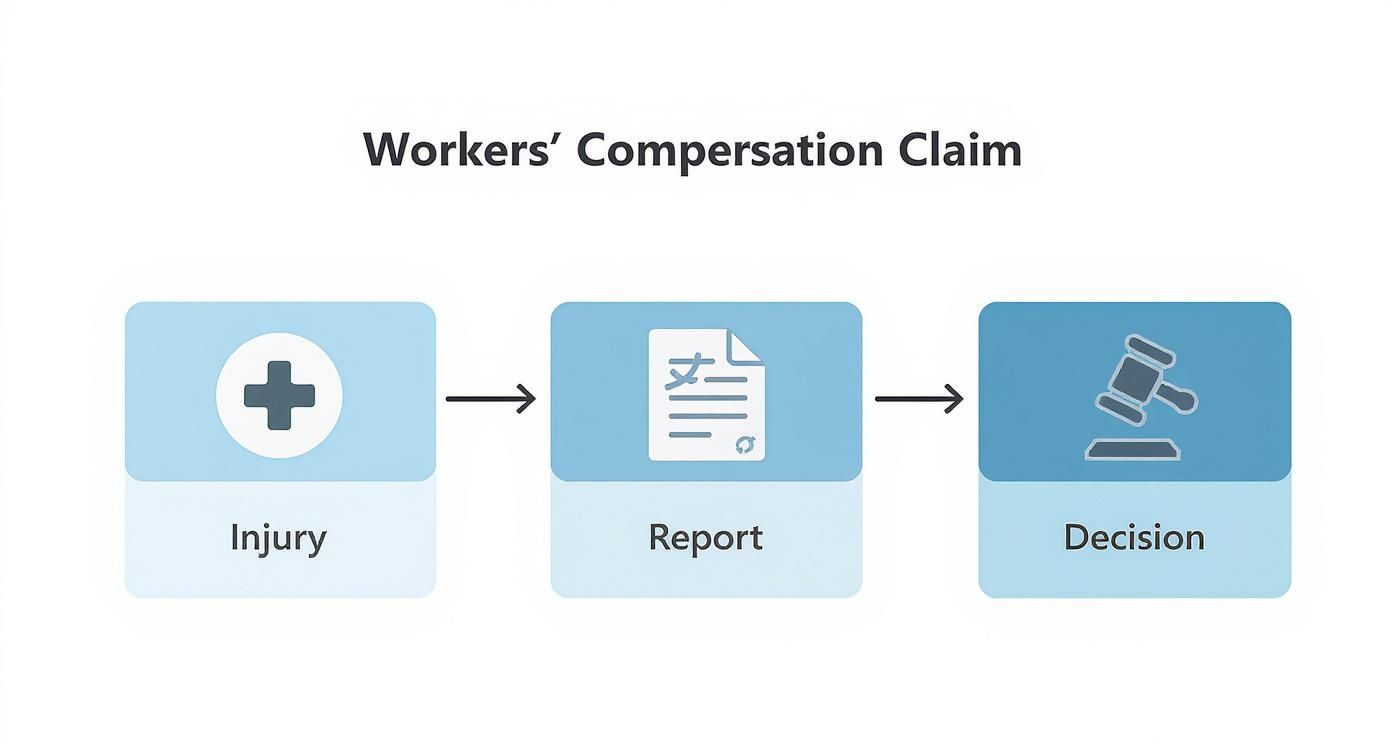
Knowing this process helps you see just how crucial a lawyer can be if the insurance company decides to deny your claim.
Key Takeaway: You pay nothing upfront to hire a workers comp lawyer in Oregon. Their fee is a state-regulated percentage of the benefits they successfully recover for you. If you don't win, you don't pay.
This system is all about giving you peace of mind. It empowers you to bring in a seasoned professional to take on the insurance company without adding any financial stress. It’s a risk-free way to level the playing field.
Why an Oregon Workers' Comp Specialist is Your Best Bet
When you're hurt on the job, you might wonder if you really need a lawyer who only handles workers' compensation. Let me put it this way: if you needed heart surgery, would you go to your family doctor or a cardiologist? The answer’s obvious. You want the specialist.
Workers' compensation law in Oregon is its own unique universe. It has a completely different set of rules, strict deadlines, and specific players—from insurance adjusters to administrative law judges. A lawyer who lives and breathes this stuff every day knows the landscape inside and out. They've seen the exact tactics insurance companies use to lowball or deny claims, and more importantly, they know how to fight back.
The Value of True Expertise
It helps to understand the level of professional you're bringing on board. The legal field in Oregon is competitive, and attorneys who build successful practices are recognized for their sharp skills and deep knowledge. This isn't about how much a lawyer costs, but rather what their standing in the profession says about the expertise you're getting.
The numbers back this up. According to the Oregon State Bar's 2022 Economic Survey, the average compensation for lawyers in the state shot up by 25.8% between 2017 and 2022, hitting $180,194. That kind of growth shows just how much value our state places on high-level legal skill. You can dig into the numbers yourself in the full economic survey from the Oregon State Bar.
What this means for you is simple: you're hiring a highly capable expert who has the professional clout to go toe-to-toe with a multi-billion dollar insurance company.
The Specialist Advantage on Your Side
So, what does that specialized expertise actually get you? It’s far more than just someone who knows the law. It’s a strategic advantage that can make all the difference.
Here’s what a dedicated workers' comp attorney brings to your case:
- Mastery of Oregon Law: They’re fluent in the specific state laws that control your case, particularly the dense regulations in Oregon Revised Statutes, Chapter 656.
- Insider Knowledge of the System: They know the administrative law judges who hear these cases. They understand their tendencies and what kind of evidence they find persuasive.
- A Realistic Claim Valuation: An experienced attorney can look at your situation and accurately estimate what your claim is truly worth, factoring in everything from future medical care to permanent impairment.
- Battle-Tested Negotiation Skills: They've dealt with the same insurance adjusters and defense lawyers hundreds of times. They know the playbook and how to dismantle it.
An insurance company has a team of professionals working to protect their bottom line. A specialized lawyer is your dedicated expert, focused entirely on protecting you and leveling that playing field.
Hiring a lawyer isn't just about getting paperwork filed correctly. It's about bringing in a seasoned professional whose deep, focused experience can be the single most important factor in getting the full benefits you deserve. Their expertise is your most powerful tool.
How to Choose the Right Workers Comp Lawyer For You

Choosing a lawyer after a work injury is one of the most critical decisions you will make. This isn't just about finding someone with a law degree; it's about finding a partner who genuinely understands the maze of the Oregon workers' compensation system. Your choice can make all the difference in the outcome of your claim.
Think of it like hiring a specialist to fix a foundation crack in your house. You wouldn't call a general handyman for such a critical job. You need an expert. In the same way, you need a lawyer whose entire practice is focused on this complex area of law, not a jack-of-all-trades who dabbles in a bit of everything.
The right workers comp lawyer in Oregon does more than just file papers. They become your strategist, your negotiator, and your strongest advocate when you’re up against an insurance company with deep pockets.
Look for Deep Specialization and Local Experience
First things first: your lawyer absolutely must be a specialist. Oregon's workers' compensation laws are their own unique world, with specific rules, deadlines, and procedures that are nothing like personal injury or any other legal field. A true specialist lives and breathes this system every single day.
Local experience is just as important. An attorney who regularly handles cases in your area knows the administrative law judges and the insurance company lawyers you'll be up against. That kind of insider knowledge is a huge strategic advantage that you just can't get from someone out of the area.
Choosing a lawyer is a big deal. You are placing your financial future and your ability to heal in their hands. Take your time, ask the tough questions, and make sure you feel a real sense of confidence in their ability to fight for you.
This level of focused expertise is demanding and highly valued. In Oregon, the average salary for a workers' compensation lawyer was around $139,040 annually as of October 2025, reflecting the skill required to succeed in this field.
Key Questions to Ask During Your Consultation
Most workers' comp attorneys offer a free consultation, and you should take full advantage of it. This is your interview. It's your chance to vet them and see if they’re the right fit for you and your case. Don't hold back.
Go in prepared with a list of questions. Here are a few must-asks:
- What percentage of your practice is dedicated specifically to Oregon workers' compensation cases? You're looking for a high number here. This tells you they are truly a specialist.
- Who will be my main point of contact at the firm? It's important to know if you'll be communicating directly with your attorney or mostly with a paralegal.
- Can you walk me through your strategy for a case like mine? This gives you a glimpse into how they think and whether they have real, practical experience with your type of injury.
- How do you like to communicate with clients, and how often will I get updates? A good relationship is built on clear and consistent communication.
It's also worth considering the firm's stability and professionalism. A firm that has solid internal processes, like good law firm crisis management strategies, is often more organized and better equipped to give your case the attention it deserves.
Trust Your Gut Feeling
Finally, after all the research and all the questions, check in with yourself. How did the meeting feel? Did the attorney listen to you? Did they explain things in a way that actually made sense?
You’re going to be working with this person during a difficult and stressful time. It’s crucial that you feel comfortable with them and trust that they genuinely have your best interests at heart. Pick the lawyer who not only has the right qualifications but also gives you the peace of mind that you’re in good hands.
What to Do Right After You've Been Hurt at Work
Knowing your rights is one thing, but acting on them is what truly matters after an injury on the job. The Oregon workers' comp system can feel like a maze, but what you need to do right away is actually pretty straightforward. Let's wrap this up with a clear, actionable roadmap.
Think of it this way: the insurance company has its team of experts working to protect its bottom line. Your job is to protect yourself. That means acting fast, understanding that the system is built to be complex, and realizing that getting expert help often costs you nothing upfront.
Your Action Checklist
To cut through the confusion and get your claim started on the right foot, focus on these four critical steps. Don't wait—the clock on your claim started ticking the moment your injury happened.
Report Your Injury Immediately
Get your injury on record with your employer as soon as humanly possible, and do it in writing. Even a quick email creates a paper trail. This simple act can shut down a lot of "he said, she said" arguments before they even start.
Get Prompt Medical Care
Go see a doctor right away. Make it crystal clear that your injury happened at work and explain exactly how it happened. You need your medical records to tell the story of your work-related injury, not just your symptoms.
Document Everything
Start a simple log or journal. Track your medical appointments, the mileage you drive to get there, who you talk to at work and when, and any time you miss. You'll be surprised how quickly you forget the details, and this log will become your best friend.
The single most powerful move you can make is to talk to someone who lives and breathes this stuff every day. A quick chat with a lawyer costs nothing and can make all the difference.
Consult a Specialist
Schedule a free consultation with a workers comp lawyer Oregon workers rely on. It’s a no-pressure way to get your questions answered, understand your options, and figure out if having an expert in your corner is the right move for you.
Got Questions About Oregon Workers' Comp? We've Got Answers.
When you get hurt at work, the questions start piling up almost immediately. It's a stressful time, and you need clear, straightforward answers. Here are some of the most common concerns we hear from injured workers in Oregon and what you absolutely need to know.
How Long Do I Have to File a Claim in Oregon?
Think of it like this: the moment you’re injured on the job, two different clocks start ticking. You have to pay close attention to both.
The first clock is for reporting your injury to your employer. You generally have 90 days from the date it happened to give them notice. Don't wait. The longer you delay, the more room you give the insurance company to question why you didn't report it sooner.
The second, and more formal, clock is for filing your actual claim (using Form 801). You have one year from the injury date to get this filed. While a year sounds like a long time, missing this deadline is one of the surest ways to have your claim denied from the start.
Can I Be Fired for Filing a Workers' Comp Claim?
This is a huge fear for many people, and for good reason. But the answer is a firm no. Oregon law is very clear on this: it is illegal for your employer to punish you for exercising your right to file a workers' compensation claim.
Oregon’s anti-retaliation law, specifically ORS 659A.040, makes it an unlawful employment practice to discriminate against a worker for filing a claim. Firing you, demoting you, or cutting your hours because you filed is against the law.
If you even suspect your job is on the line because you filed a claim, you need to document everything and talk to a lawyer right away. This isn't something you should face on your own.
What Happens When My Doctor and the Insurer's Doctor Disagree?
It's an incredibly common scenario. Your doctor says you need a certain treatment or can't return to work yet, but the insurance company pushes back. Their next move is almost always to send you to what they call an Independent Medical Examination (IME).
Let's be clear: there's nothing "independent" about it. This is a doctor hand-picked and paid for by the insurance company. Their job isn't to give you a helpful second opinion; it's to find reasons to downplay your injury, question its connection to your job, or declare you ready to work before you actually are.
When an IME report comes back and contradicts your own doctor, don't panic. This is a standard tactic. A seasoned workers comp lawyer in Oregon knows exactly how to fight back. We can challenge the IME doctor's findings, highlight the evidence from your treating physician who knows your case best, and make sure a judge hears the whole story, not just the insurer's version of it.
If you're dealing with a denied claim or just feel lost in the process, you don't have to go it alone. The team at Bell Law is here to offer the expert advice and strong representation you deserve. Contact us today for a free consultation to discuss your case.
Disclaimer: The information on this page is provided for general informational purposes only and is not legal advice. Reading this content does not create an attorney-client relationship. For advice about your specific situation, please contact a licensed attorney.